
Bed Bug Bites: What They Look Like & What to Do
They fed while you slept, left marks you didn’t notice until morning, and now you’re trying to figure out if this is actually bed bugs. Here’s how to know for sure.
Bed bug bites appear as small, raised red or pink welts — almost always in a line, cluster, or triangle pattern on skin that was exposed while you slept. The tricky part is they don’t look all that different from a mosquito bite or a flea bite when you’re staring at a single mark. What gives them away is the pattern, the timing, and where on your body they show up.
This guide covers everything you need to identify bed bug bites — on all skin tones, across different body locations, and at every stage from fresh bite to healed.If you’ve already confirmed an infestation and need professional help, our Houston bed bug exterminator covers the entire metro area.
What do bed bug bites look like?
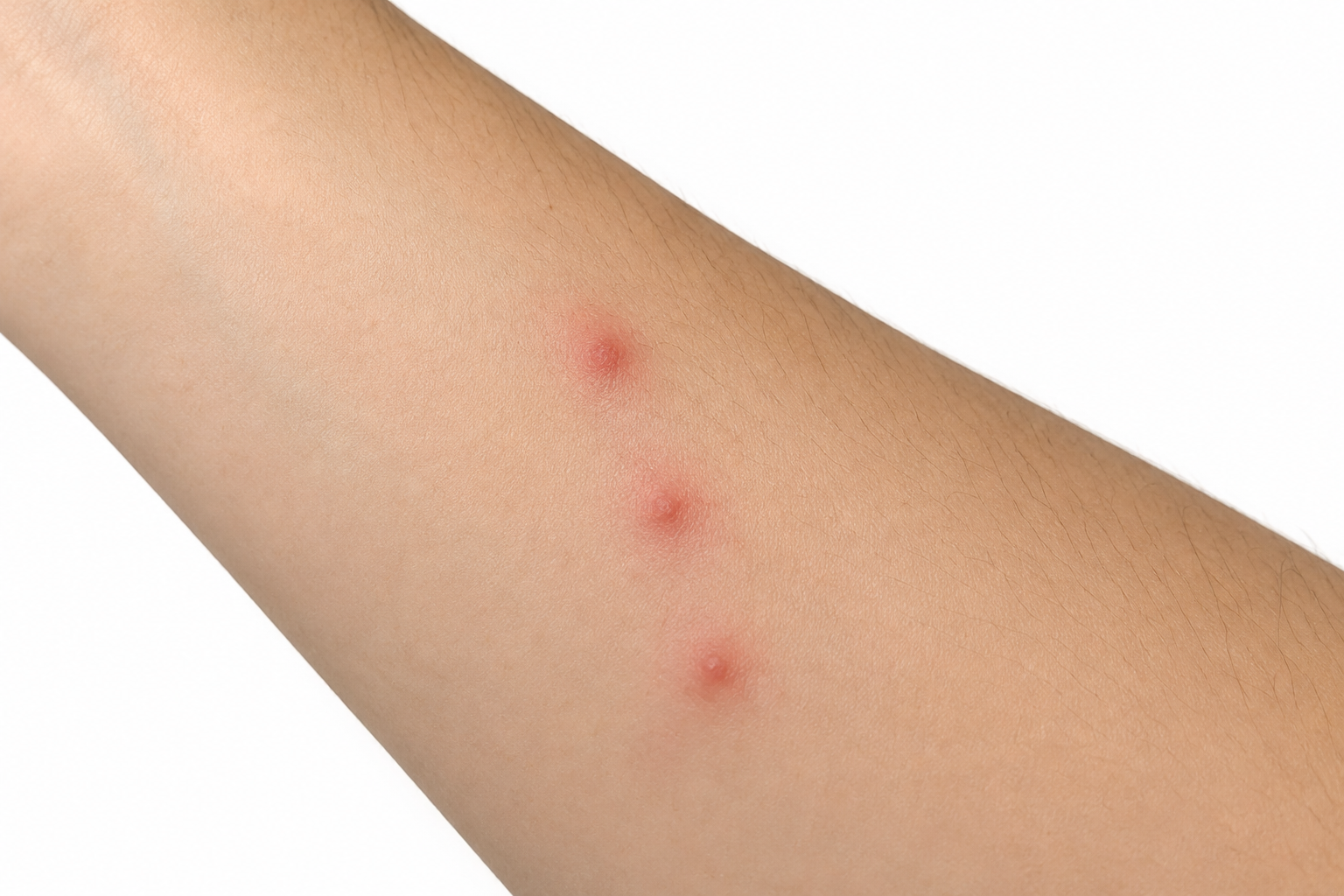
A typical bed bug bite is a small, firm, raised welt with a slightly darker red dot at the center. It’s not huge. It doesn’t blister immediately. It sits on the skin, itching, and it looks a lot like a mosquito bite — until you notice there are three of them grouped together in a row.
That grouping is the real tell. Bed bugs don’t bite once and leave. A single bug feeds, moves a little, feeds again. You end up with two, three, or four bites close together in a line or cluster. Pest inspectors sometimes call it “breakfast, lunch, and dinner” — one bug, a few stops, a few marks.
Three to five bites grouped in one patch. Common on arms, shoulders, or the neck. Looks like a small rash at first glance.
Bites running in a rough row across skin — sometimes straight, sometimes curved. One of the clearest visual signs of bed bug activity.
What bite patterns do bed bugs leave? Triangle, line, and zigzag explained
The pattern matters more than how any single bite looks. Here’s what each pattern means:
| Pattern | What it tells you |
|---|---|
| Straight line (2–4 bites) | One bug fed in a row, moving slightly between each bite |
| Triangle (3 bites) | One bug repositioned itself twice during a single feeding session |
| Zigzag | Multiple bugs feeding in the same area on the same night |
| Large random cluster | Active infestation — several bugs feeding at once |
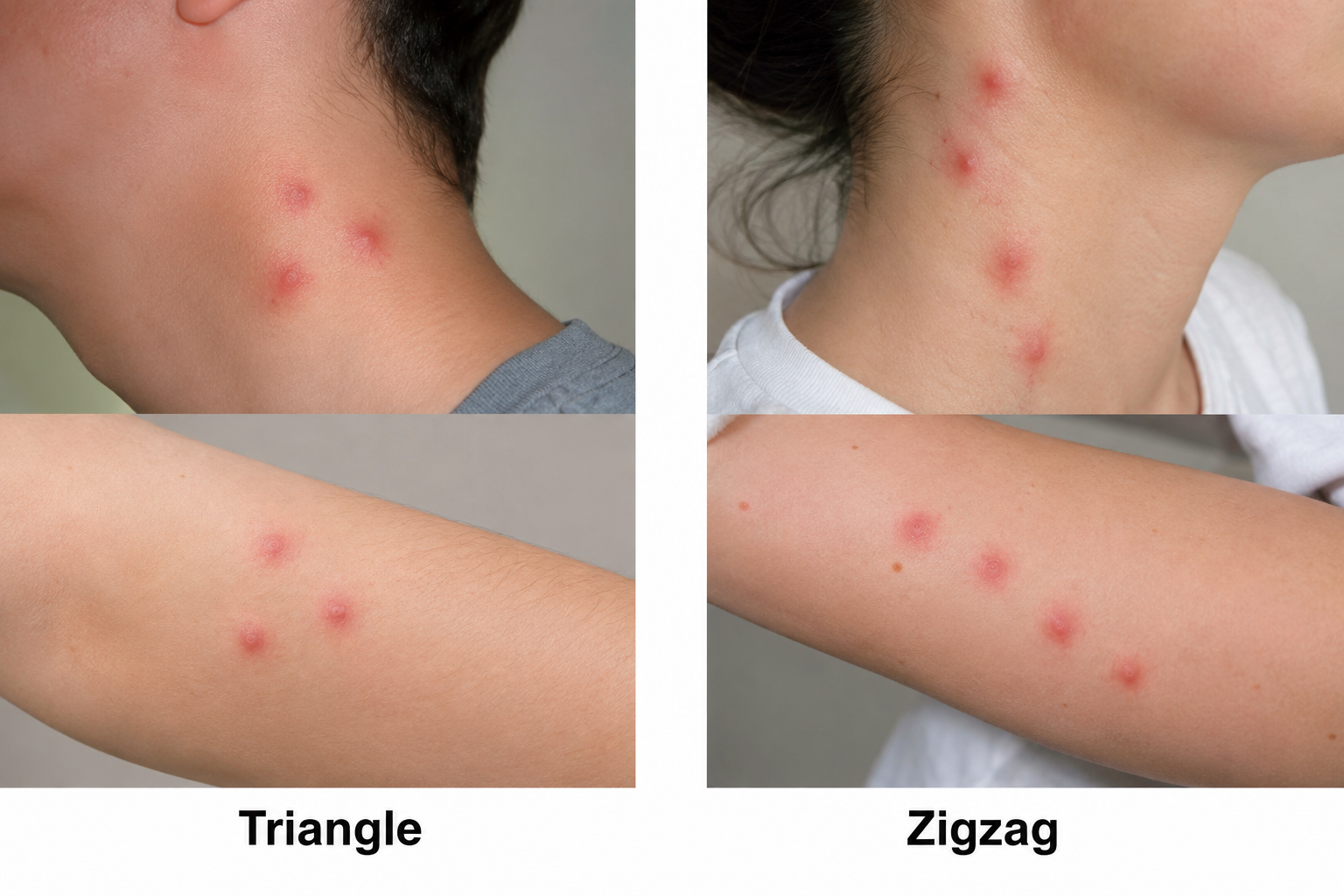
The “3 bumps in a triangle” and “3 small bites in a triangle” searches people run are describing the same thing — one bug, three bites, repositioned twice. It’s the single most searched bed bug pattern and one of the strongest visual indicators of an active infestation.
If you’re seeing that pattern repeat morning after morning, the infestation has grown and won’t resolve on its own. Our bed bug heat treatment in Houston eliminates every bug and egg in a single visit — no chemicals, no repeat appointments.
What are the symptoms of bed bug bites?
The reaction varies a lot between people, but the most common symptoms are:
- Small raised welt that feels firm when pressed — not soft like a blister
- Darker red or pink dot at the center of each bite
- Intense itching that’s often worse than a mosquito bite and lasts for days
- Delayed reaction — bites may not appear until 1 to 3 days after you were bitten
- Multiple bites in a grouped or patterned arrangement, not random single marks
- Bites that weren’t there when you went to bed but appear in the morning
That delayed reaction catches people off guard. You can sleep somewhere, come home, and not see anything for two or three days. By then you’ve forgotten where you were. That delay is completely normal with bed bug bites — it doesn’t mean the bite happened recently.
For the full picture of signs beyond bites — stains, smells, shed skins — our bed bug symptoms and identification guide covers everything to look for.
Where do bed bugs bite on the body?
Bed bugs go for whatever skin is uncovered while you sleep. They can’t bite through fabric. So wherever your blanket or clothing leaves skin exposed overnight, that’s the target.
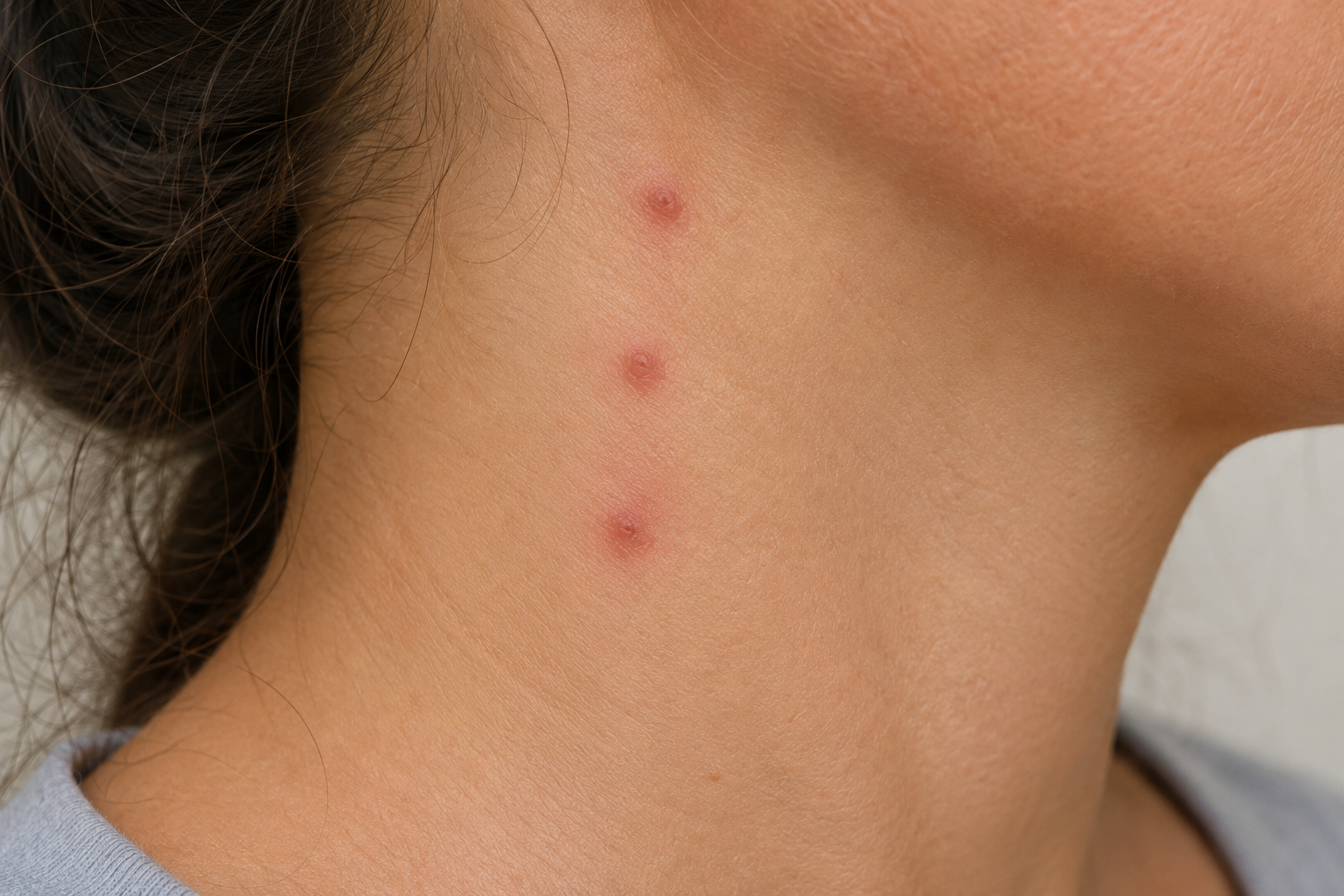
Face and neck
Common when bugs have spread into the pillow or pillow cover. Bites around the eyes, along the jawline, or just above the collar. Often appear in short lines of two to three marks.
Arms and hands
The most frequently bitten area. Forearms, wrists, and the soft underside of the upper arm. Side sleepers with an arm resting outside the covers are especially vulnerable. Bites here usually show up in short rows.
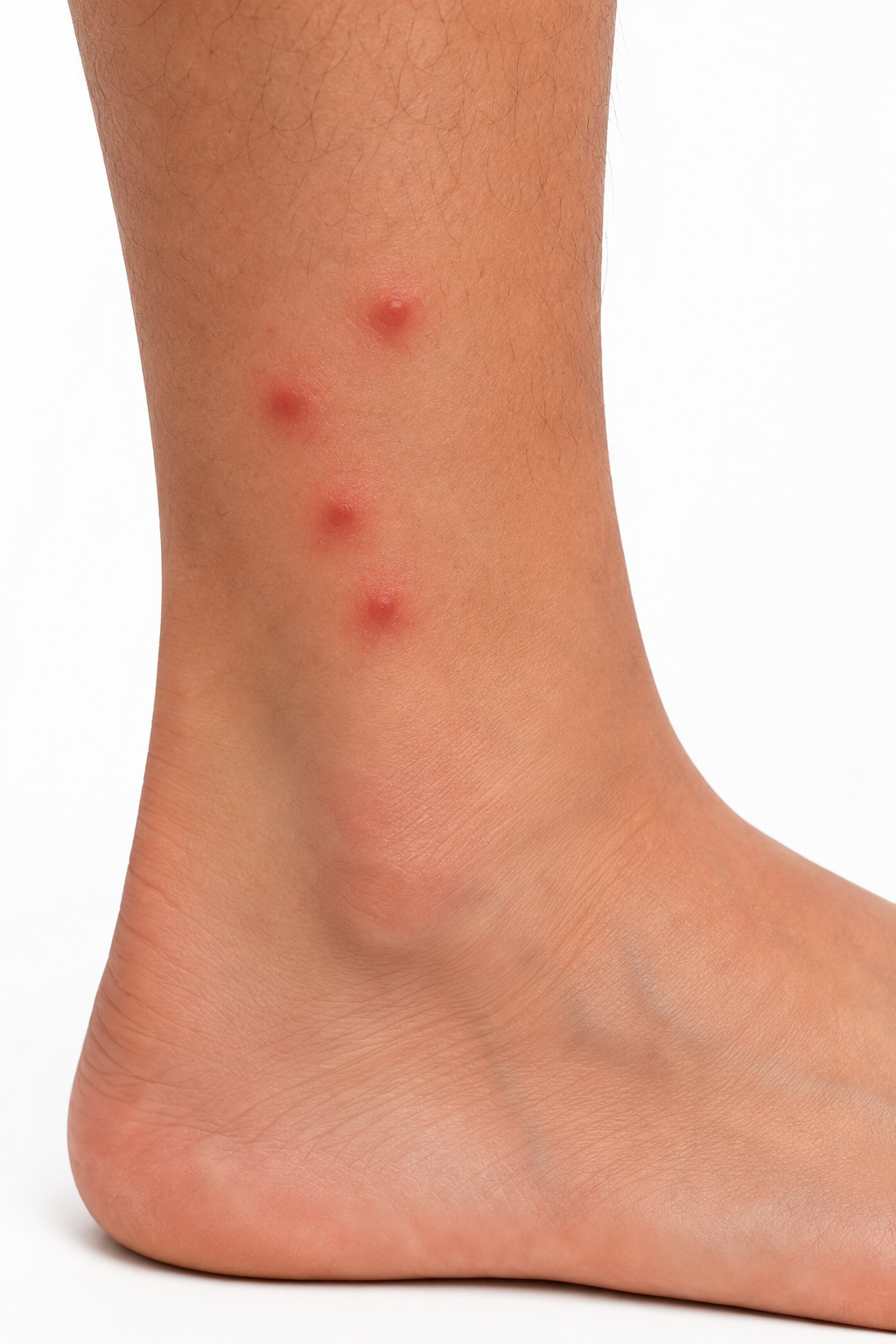
Legs and ankles
Bitten when the blanket doesn’t reach all the way down. Calves and just above the ankle are the most common spots. A line of bites running up the calf is a strong indicator of bed bug activity rather than fleas, which concentrate more around the sock line.
Scalp
Less common, but it happens when bugs have spread into the pillow itself. Usually appear near the hairline or behind the ears. Often mistaken for dandruff irritation or folliculitis.
Under the breast and torso
Usually means the infestation has reached the mattress directly beneath you. Bites follow the fold lines where your skin presses against the bedding — tight clusters rather than long rows.
What do bed bug bites look like on dark skin?
On dark skin, bed bug bites appear as pink, purple, or brownish raised bumps — not the bright red welts that show clearly in most photos. The color difference that makes bites so obvious on lighter skin simply doesn’t show the same way on deeper tones.
Red bumps are easy to spot. The pink halo around each bite is clearly visible. Line and cluster patterns stand out well.
Redness may look more reddish-brown or dusky. Focus on raised texture over color. The cluster shape still gives it away.
Red may not show at all. Bites appear as dark spots or feel rough. Run a finger over the area — the raised bump is there even when color isn’t obvious.
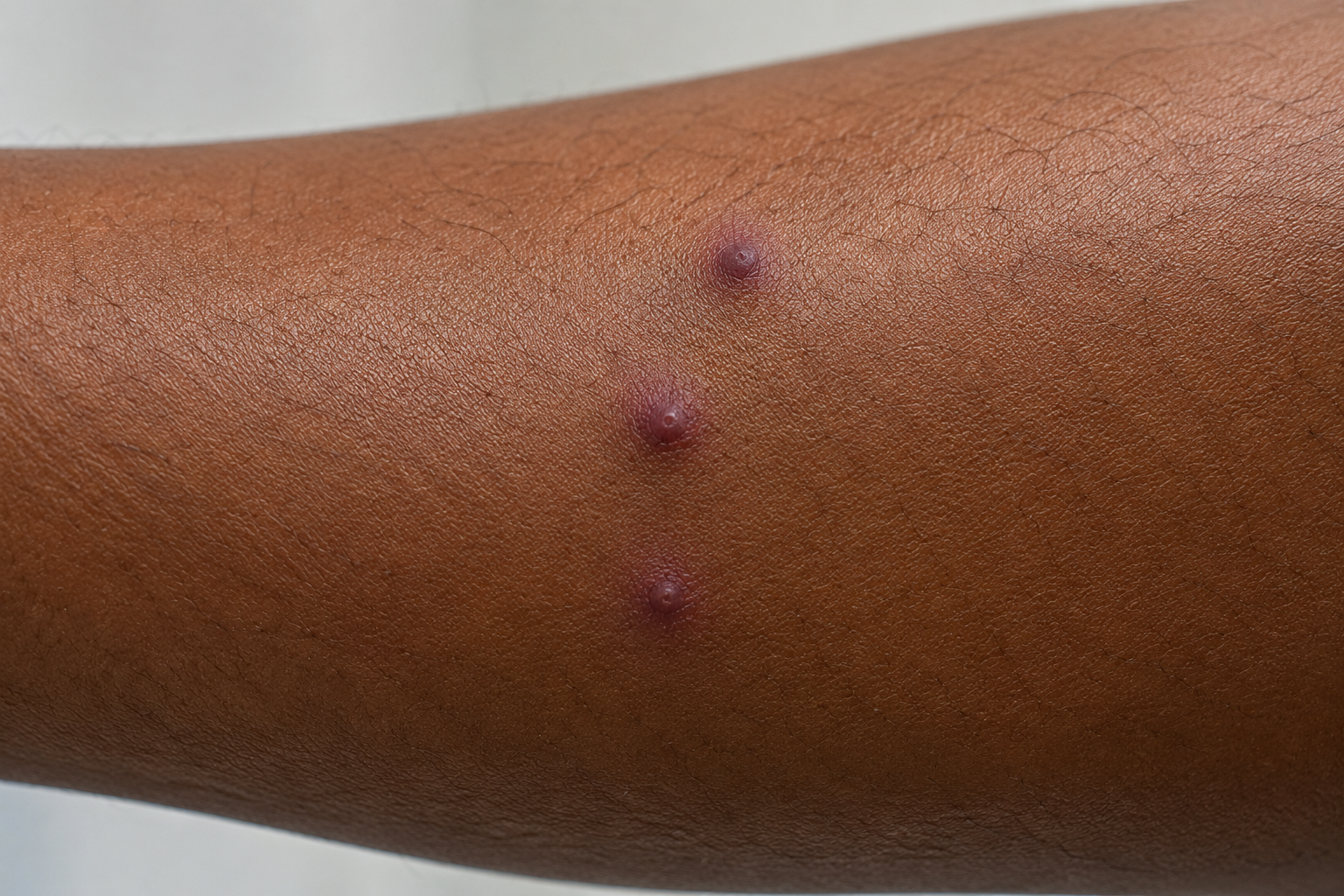
What to look for on darker skin tones instead of redness: raised texture when you run your finger over the area, localized swelling, intense overnight itching, and the same grouped pattern appearing in the same location morning after morning.
Bed bug bite stages — from fresh to healed
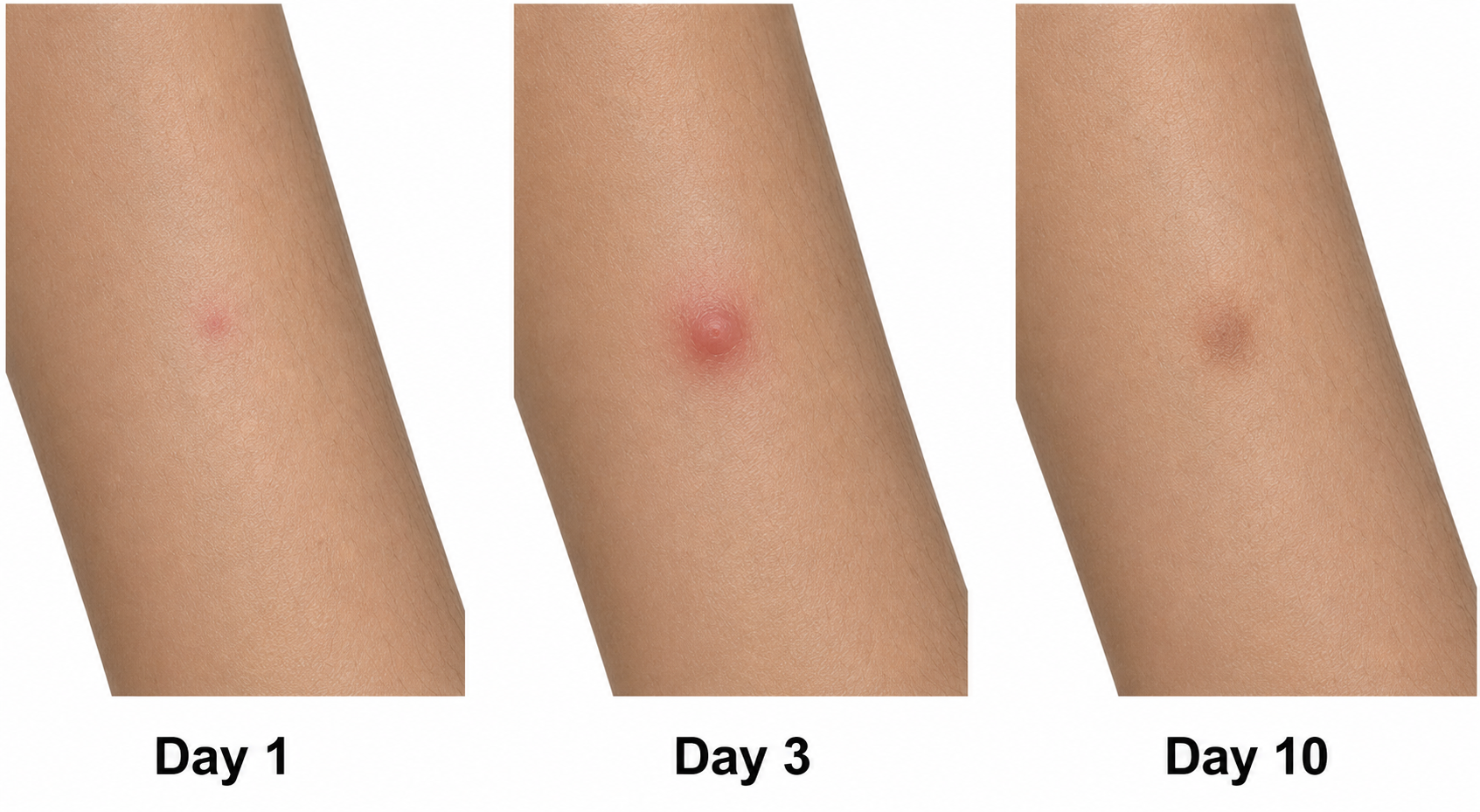
If you’re still getting new bites each morning, the infestation is active. It won’t stop on its own. Before you call, check our bed bug extermination cost guide so you know exactly what Houston treatment runs.
How long do bed bug bites last?
For most people, bed bug bites remain visible for 5–10 days. If your skin is more sensitive, marks can linger for up to two weeks — noticeably longer than mosquito or other outdoor insect bites, which usually settle within a few days.
The itching typically peaks around days 3–5 (the same window as the peak of the bite stages above), then fades gradually. Two things make bites last longer than they should:
- Scratching. Breaking the skin invites infection — if a bite becomes warm, increasingly painful, or leaks fluid, have it looked at by a doctor.
- New bites on top of old ones. If fresh welts keep appearing while old ones fade, the infestation is still active — treating your skin without treating the room means the cycle simply continues.
That second point is the one that matters: bites that keep coming back are a room problem, not a skin problem. A single heat treatment ends the source in one day.
Bed bug bites vs mosquito, flea, and spider bites
The pattern and timing are more useful than appearance alone. Here’s the clearest comparison:
| Feature | Bed bug night | Mosquito random | Flea lower body |
|---|---|---|---|
| Pattern | Line, triangle, zigzag cluster | Random single bites | Clusters around ankles and feet |
| Location | Arms, neck, shoulders — exposed sleep skin | Anywhere, no pattern | Ankles, calves, feet — from the floor up |
| Timing | Overnight only, while sleeping | Day or night, outdoors mainly | Anytime, indoors or out |
| Reaction speed | Delayed — often 1–3 days | Immediate — feel it within minutes | Fast — red halo appears quickly |
| Who gets bitten | Person sleeping in the infested bed | Anyone nearby | Anyone walking through — pets too |
Simple rule: bites above the waist, grouped, appearing overnight indoors — bed bugs. Bites from the knee down, pets scratching, random pattern — check for fleas first. Random single bites after time outside — probably mosquitoes.
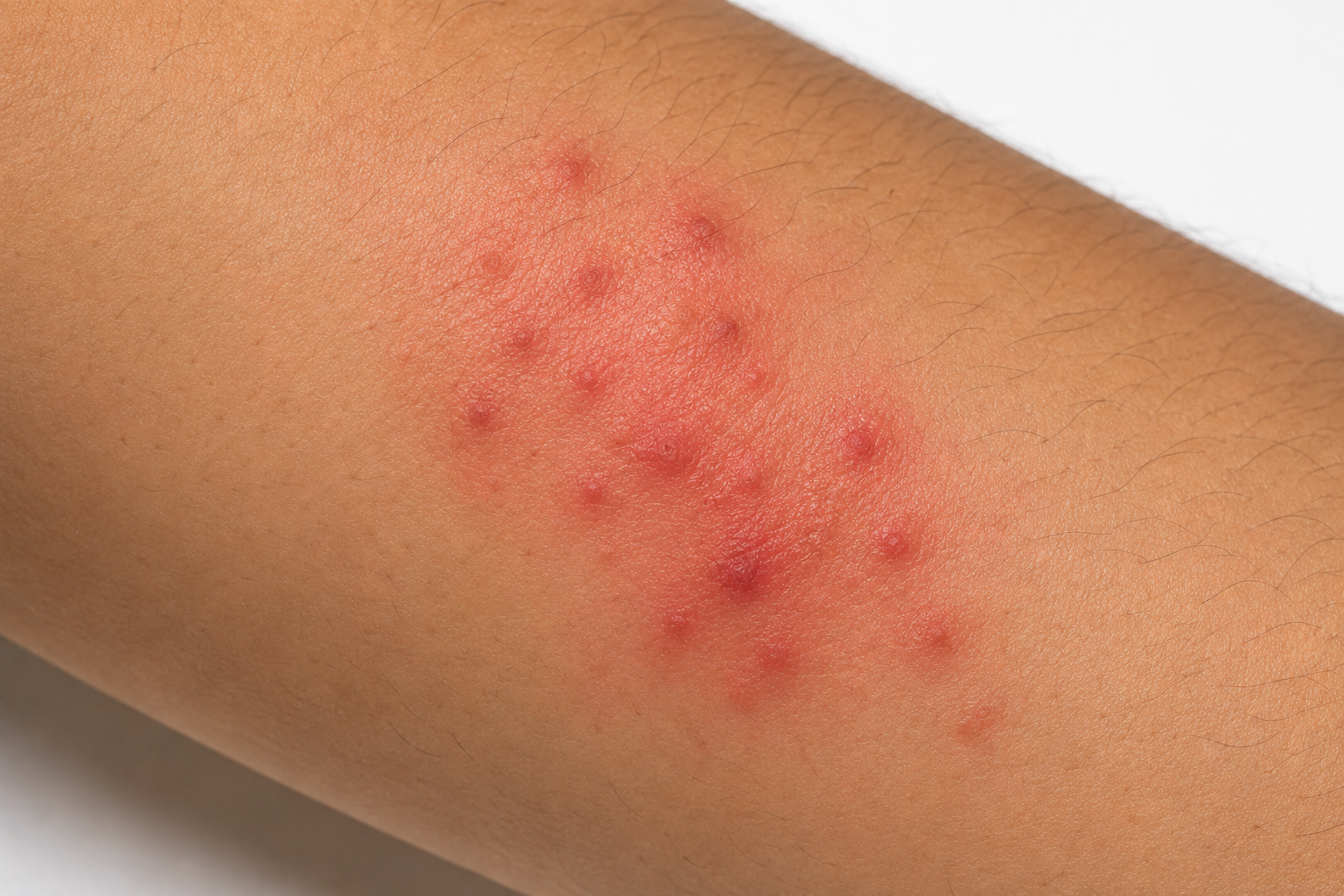
Bed bug bite rash — when the reaction spreads
Some people develop a rash that goes beyond the individual bite marks. This happens when the immune system overreacts to the saliva proteins — causing widespread redness or hives around and between the bites.
A bed bug rash looks like a red inflamed patch with multiple bumps grouped closely together. In stronger reactions, individual bites merge into a single raised area that resembles hives. It’s almost always on skin that was exposed during sleep, which helps distinguish it from other rash types.
Seek medical attention if: blisters form on or around bite sites, the rash spreads beyond the bitten area, or you notice difficulty breathing — that can indicate a severe allergic reaction and needs emergency care.
Can you have bed bugs with no bites at all?
Yes — and this surprises a lot of people. Around a third of people don’t react to bed bug bites visibly. No redness, no itching, nothing on the skin. That’s why two people sleeping in the same bed can have completely different experiences — one covered in bites, the other feeling nothing.
It also means an infestation can grow silently for weeks before anyone’s skin shows anything. Don’t rule out bed bugs just because you’re not reacting. Look for physical evidence instead:
What to do right now: a 5-minute bed check
If you woke up with suspicious bites this morning, don’t wait for more evidence to accumulate. Check these four places before tonight:
- Strip the bedding. Look for pinhead-size dark spots or rust-colored staining on the sheets and mattress cover — these are droppings and blood marks, the most common first evidence.
- Check the mattress seams with your phone flashlight. Run the light along the piping, seams, and tags. You’re looking for live bugs (apple-seed size, reddish-brown), pale shed skins, or tiny white eggs.
- Photograph your bites. Document the pattern (line, triangle, or cluster) and the date. If new bites appear in the coming days, the photos establish the timeline — useful for a professional bed bug inspection, and essential if you rent and need to notify a landlord.
- Check the headboard and bed frame joints. After the mattress, this is where bed bugs hide most — especially screw holes and where wood pieces meet.
Found something — or found nothing but the bites keep coming? A professional bed bug inspection settles it either way. We serve Houston, Katy, Cypress, and Sugar Land — check availability: request a callback or call (833) 809-0699.
Frequently asked questions
Still waking up with new bites every morning? A single female bed bug lays up to 500 eggs in her lifetime. The infestation won’t stop on its own — and the longer you wait, the more rooms it reaches.
See How Heat Treatment Works → (833) 809-0699 — Speak to a Local Specialist