If you’ve already sprayed vinegar on your mattress at midnight hoping for a miracle — you’re not alone. Here’s what actually works.
Three in the morning, red welts on your arm, one question stuck in your head — does vinegar kill bed bugs? Reddit says yes. You grab the bottle, spray everything, and go back to bed.
Two nights later, the bites are back. Worse, actually.
If that’s where you’re at right now, this is the article you need. Not a list of home remedies to try next — an honest explanation of what vinegar actually does to a bed bug problem, why it keeps failing people, and what gets rid of them for real.
The short answer
Vinegar kills a bed bug only if it lands directly on the bug — it does nothing to eggs, and it can’t reach the mattress seams, wall voids, and furniture joints where most of a colony actually lives. A handful of visible bugs might die on contact, but the eggs keep hatching on schedule and Houston’s year-round heat keeps the colony breeding. Past a stray bug or two, vinegar is a delay, not a treatment.
Does Vinegar Kill Bed Bugs?
Sort of — but the catch is big enough to make that answer almost meaningless.
Vinegar is acidic. Spray it directly on a live bed bug and the acetic acid messes with its nervous system. The bug dies. So yes, in that very specific situation — bug visible, spray lands on it — vinegar works.
That’s where the good news ends.
But here’s the problem.
You will never spray every bed bug in your home. Not even close.
Bed bugs don’t live out in the open waiting to be sprayed. They hide inside box springs, behind electrical outlet covers, inside the cracks of your bed frame, beneath baseboards, and sometimes inside the walls themselves. A Houston home with a moderate infestation can have hundreds — sometimes thousands — of bugs hiding in places no spray bottle will ever reach.
Vinegar touching a bed bug kills it. Vinegar missing a bed bug — which is almost every bed bug in your home — does absolutely nothing. And in a real infestation, you’re going to miss almost all of them.
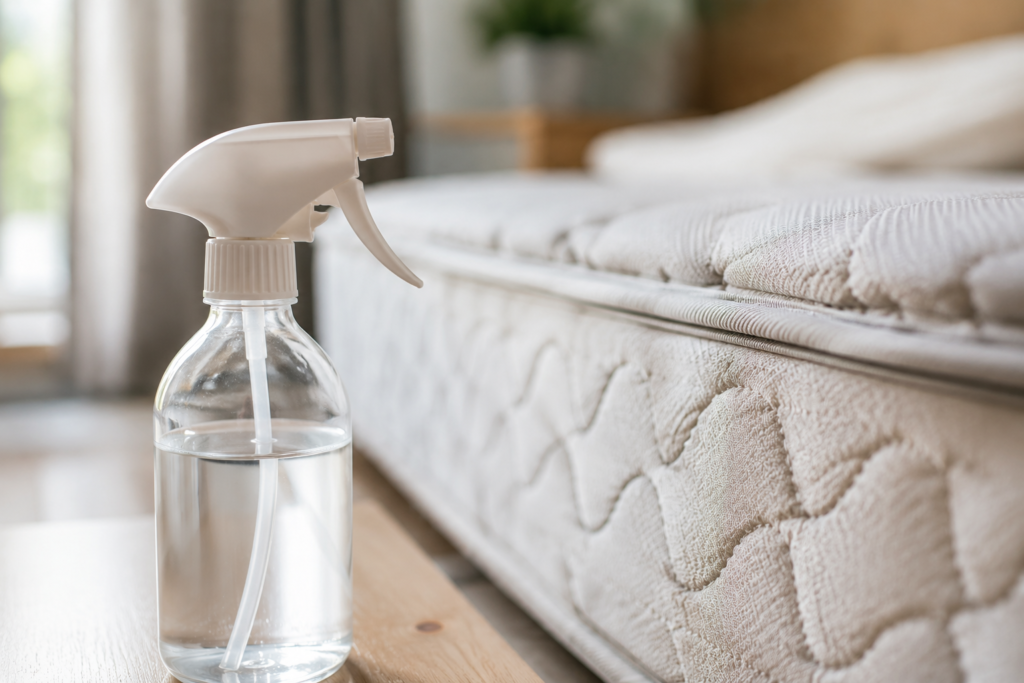
What Actually Happens When You Spray Vinegar for Bed Bugs
Houston homeowners who try the vinegar route tend to go through the same sequence:
You spray the surface areas you can see. Some bugs die on contact. The rest scatter deeper into hiding. You feel like it’s working for a day or two because the visible activity slows down.
Then the eggs hatch.
Here’s what most people don’t find out until it’s too late — vinegar does nothing to bed bug eggs. The eggs have a coating that acetic acid can’t get through. So even in the fantasy scenario where you somehow sprayed every single adult and nymph in your home, the eggs would still hatch one to two weeks later and you’d be right back where you started.
That’s the cycle people get stuck in. Try vinegar, feel like it’s working, get hit again three weeks later — usually in more rooms than before, because spraying disturbs the colony and sends bugs scattering deeper into the house.
Other Home Remedies That Don’t Work Either
Since you’re researching this, you’ve probably also come across these:
| Home Remedy | Why It Fails Against a Real Infestation |
|---|---|
| Steam | Kills bugs and eggs on contact — the one DIY method with real science behind it — but only what it directly touches. See whether steam kills bed bugs and when it’s worth trying. |
| Rubbing alcohol | Kills on contact like vinegar, same missed-bug problem — plus highly flammable near outlets or open flame. |
| Essential oils (tea tree, lavender, peppermint) | Repels bugs in lab settings only. No scientific evidence it works at infestation level. |
| Diatomaceous earth | Damages the exoskeleton slowly over time. A legitimate supplementary measure, but too slow and messy to treat an active infestation alone. |
| Freezing items | Kills bugs on individual items held below 0°F for 4 days. Does nothing for bugs living in walls, furniture, or flooring. |
| Bug bombs and foggers | Chemical mist never reaches bugs hiding in seams, wall voids, and furniture joints — and often scatters them deeper into hiding. See why bed bug foggers don’t work. |
The pattern across all of these is the same: they might affect individual bugs you can reach, but they cannot eliminate a colony, they cannot touch eggs, and they cannot reach the hiding places where 95% of your infestation actually lives.
Why Houston Is Especially Difficult for DIY Bed Bug Treatment
Houston’s climate works against you here.
Houston’s heat and humidity — miserable for people — is genuinely ideal for bed bugs. Cities with cold winters get a natural slowdown in infestation activity. Houston doesn’t. The breeding cycle runs all twelve months, with females dropping one to five eggs a day when conditions are good. And in Houston, conditions are almost always good for them.
Every week spent on home remedies is a week the colony is getting larger. “Houston homeowners in surrounding areas like Katy TX face the same problem — bed bugs spread just as fast in suburban homes as they do inside the city.” A problem that starts in the master bedroom doesn’t stay there. Within a few weeks it’s in the couch. Then the guest room. One Houston family we’ve seen had bugs in their car because they started sleeping in it to escape the bedroom — and brought the infestation with them.
If you’ve recently stayed in a hotel, bought secondhand furniture, or moved into a new place, that’s almost certainly where they came from. Knowing the early warning signs makes a real difference in catching it before it spreads further.
How to Know If You Have a Full Infestation (Not Just a Few Stray Bugs)
Before assuming the worst, take five minutes to actually look. Pull back your mattress seams, check the joints of your bed frame, and look along the baseboard behind the headboard. What you find — or don’t find — tells you a lot. Signs that point toward a real infestation rather than a stray bug or two:
- Small rust-colored stains on your sheets or mattress seams — this is bed bug excrement
- Tiny white eggs or shed skins in the folds of your mattress
- A faint musty odor in the bedroom, similar to coriander — produced by the bugs’ scent glands
- Waking up with bites in a line or cluster, particularly on exposed skin
If you’re seeing more than one or two of these signs, you’re not dealing with a stray bug. You have a colony. And a colony requires professional treatment.
If you’re still unsure whether what you’re seeing is actually bed bugs, visit our Houston bed bug extermination page for a full overview of what Houston homeowners need to know before spending money on anything.
What Actually Kills Bed Bugs — Completely
There are really only two methods with consistent, proven track records for full elimination:
Professional heat treatment is what actually works. Industrial heaters bring every room in your home up to 130–140°F and hold it there long enough for the heat to soak into mattress foam, wall gaps, and the tight joints of your furniture — everywhere bugs and eggs hide that no spray bottle reaches. The whole thing is done in one day, no chemicals, no residue, nothing to air out when you get home. If you want to understand exactly what the process looks like before committing, here’s how heat treatment works in Houston.
Professional chemical treatment uses EPA-approved pesticides applied by a licensed exterminator directly into the cracks, crevices, and voids where bugs actually live. This method takes longer — typically 30 days for full elimination across multiple visits — but costs less than heat treatment upfront.
The Honest Math on Home Remedies vs Professional Treatment
Most people don’t add up what they’ve already spent before picking up the phone.
Two weeks of sprays that didn’t work. A bag of diatomaceous earth. Two mattress covers. Maybe a new vacuum because the old one felt contaminated. Every piece of fabric in the house washed twice — some of it three times. And through all of it, you’re not sleeping properly, you’re checking the sheets before bed, and somewhere around day ten the bites show up in the guest room too.
By the time a Houston homeowner finally calls a professional, they’ve usually burned through $150 to $300 on things that didn’t solve the problem. Worse, the infestation they could have treated in one room is now in two. That directly affects what treatment costs.
Professional bed bug treatment cost in Houston runs between $300 and $1,500 depending on how far things have spread and which method makes sense for your home. That number stings until you put it next to what you’ve already spent — plus the cost of a new mattress, a couch you ended up throwing out anyway, and three weeks of genuinely bad sleep.
The earlier you call, the smaller the infestation. The smaller the infestation, the lower the treatment cost. Every week of DIY attempts works against you on both counts.
What to Do Right Now If You Think You Have Bed Bugs
Don’t spray vinegar. Don’t throw out your mattress — this spreads bugs to other parts of your home and is almost never necessary with proper treatment.
Do this instead:
- Stop sleeping in a different room — this causes bugs to follow you and spread the infestation
- Bag and wash all bedding on high heat immediately
- Take clear photos of any bugs, bites, or signs you’re seeing
- Call a licensed Houston bed bug exterminator today for a professional inspection
Most reputable bed bug exterminators in Houston inspect before they treat. A professional can confirm whether you have bed bugs, identify how widespread the infestation is, and recommend the right treatment for your specific situation — before it gets worse.
Dealing with bites but not sure if they’re from bed bugs? Read our guide on what bed bug bites look like to know for certain what you’re dealing with.
Area guides: Sharpstown · Missouri City · Katy, TX
Frequently Asked Questions
1. Can vinegar kill bed bug eggs or just the adults?
Vinegar only affects bugs it directly touches — and even then only adults and nymphs. The eggs have a protective coating that acetic acid can’t penetrate at all. This is the biggest reason vinegar fails as a treatment. Everything already hiding in your mattress seams and wall gaps keeps developing on its own schedule — vinegar never touched them to begin with.
2. How long does vinegar take to kill a bed bug?
Fast if you’re spraying directly on one — seconds to a couple of minutes. But that’s the only scenario where timing even matters. The bugs living inside your box spring, behind your headboard, and along your baseboards never come out to get sprayed. Those ones just keep breeding.
3. Does white vinegar work better than apple cider vinegar for bed bugs?
White vinegar edges out apple cider vinegar on acidity but honestly it makes no real difference. A bed bug colony doesn’t care which bottle you’re using — both fail for the same reason. They don’t reach the bugs you can’t see, and neither touches a single egg. It’s a pointless comparison when both options lead to the same outcome.
4. Will spraying vinegar on my mattress make bed bugs worse?
Spraying anything that irritates bed bugs without eliminating them pushes the colony to scatter. They don’t disappear — they move. Rooms that were clean before suddenly have activity. People think the infestation is spreading on its own but the spraying accelerated it. Seen it happen more times than you’d think.
5. Is vinegar safe to spray on bedding and furniture?
Generally yes — it won’t damage most fabrics or surfaces and it’s non-toxic. The safety isn’t the issue. The issue is that spraying something safe and ineffective delays you from getting something that actually works, and every week of delay gives the infestation more time to spread.
6. What happens if I spray vinegar and the bed bugs come back?
They were never gone — just temporarily disrupted. The eggs were always there, hatching on schedule. What feels like bed bugs “coming back” is actually the same infestation continuing. At that point most Houston homeowners have already lost two to three weeks, and the colony has spread further than it was when they started.
Ready to stop guessing and get rid of bed bugs for good?
Wondering how vinegar compares to steam, foggers, and professional treatment? See our full breakdown: Is There a 100% Way to Get Rid of Bed Bugs in Houston?
Call Houston’s bed bug specialists today for an inspection. Don’t let one more night go by.
📞 (833) 809-0699 — Available today for Houston and surrounding areas