
The short answer
Do bed bugs come back after heat treatment? Sometimes, yes. A bug seen after treatment is usually either a survivor from a spot that never got hot enough, or a new arrival carried in from outside. Several bugs of different sizes in the old spots point to survivors. A single adult after weeks of quiet points to a new arrival.
Does that mean the treatment failed? Not always. Heat kills what it reaches, then it is done, with no leftover protection. So how do you tell the two apart, what should you check each week, and when is it smart to get another set of eyes on it? That is what this guide covers.
In this guide
What heat has to do before it counts
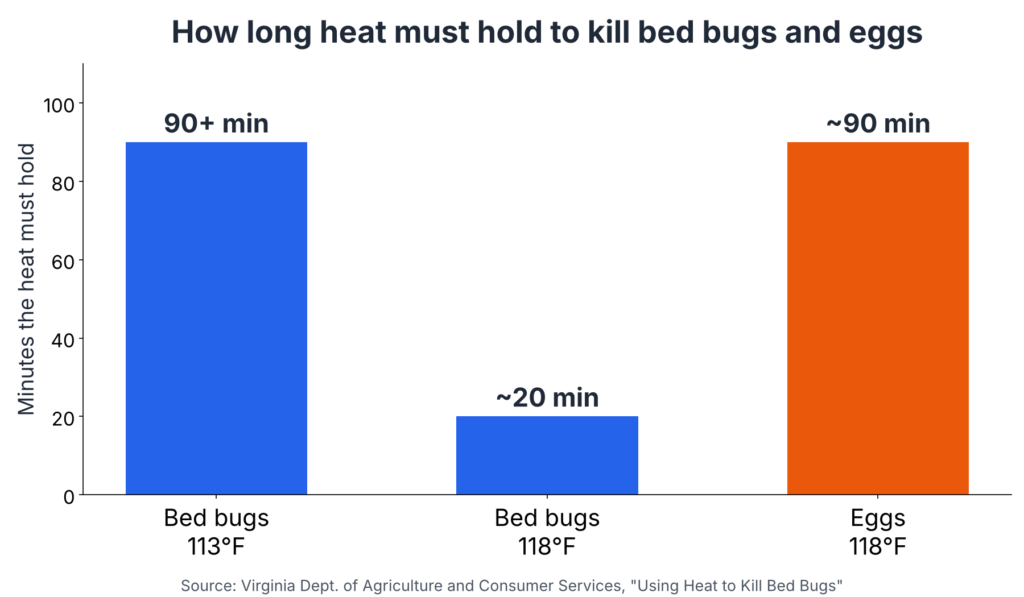
Heat only works if every hiding place gets hot and stays hot (here’s how heat treatment works in Houston homes). A Virginia state agriculture fact sheet puts numbers on it. Bed bugs die at about 113°F after 90 minutes or more. Or at about 118°F in around 20 minutes. Eggs are tougher. They need about 118°F for 90 minutes. In whole-room jobs, sensors have to read 113 to 115°F, and then the crew keeps heating for at least another hour.
People forget the hold time. They also forget that the thermostat in the middle of the room isn’t the number that counts. What counts is the temperature deep inside a mattress seam or a wall void.
Why do I still see a bed bug after heat treatment?
Most sightings come down to three causes.
A cool pocket stayed cool. The same fact sheet warns about cold spots. Those are places that stay cooler than the rest of the room. A heavy dresser flush against the wall. A jammed closet. A packed bookshelf. Heat struggles to push through any of them.
Something came back in. Once the room cools, nothing lingers. A bug that wanders in the next day, rides in on laundry, or comes home on a secondhand chair meets no resistance at all.
An item skipped the heat. Clothes in bags. Sealed bins. Anything carried out of the room during treatment. None of it may have reached the target temperature, and when it all goes back in, any bugs hiding in it go back too.
Survivor or new arrival: how to read the pattern
A single bug says very little. A pattern says a lot.
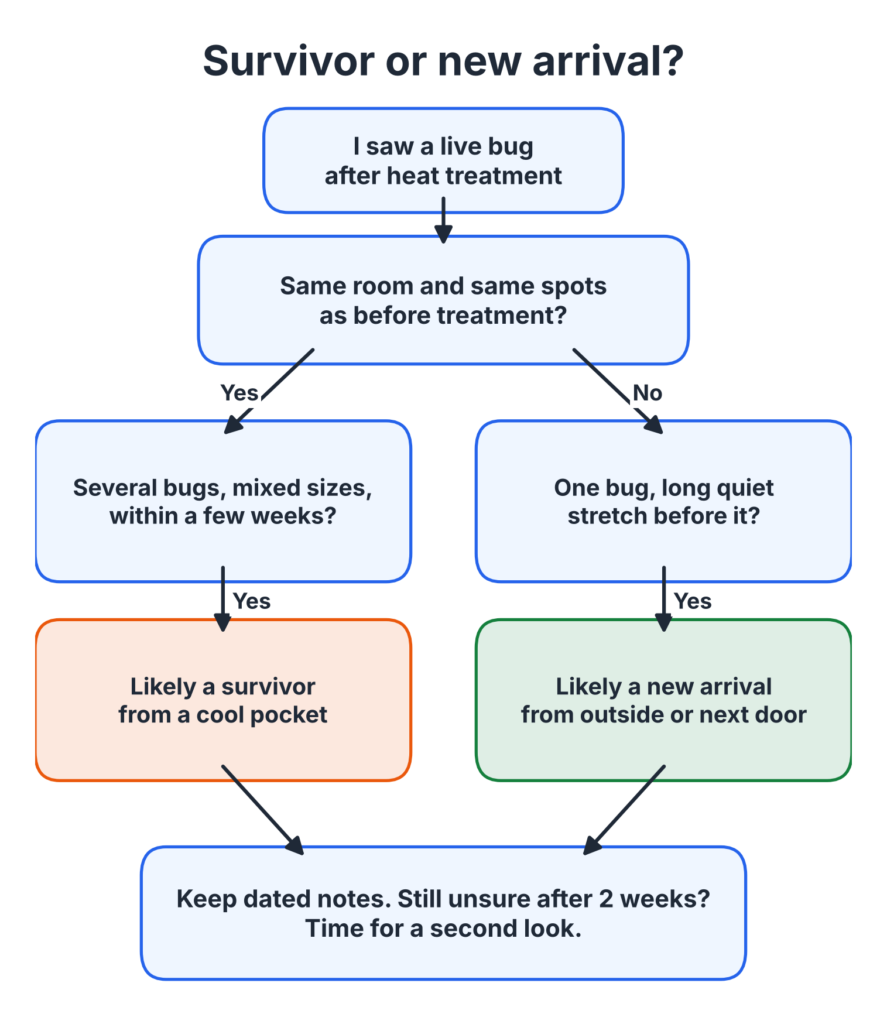
Several live bugs of different sizes in the first few weeks? Think survivors. A breeding group rarely shows up in one size. Finds in the exact same spots as before treatment point the same way, because bugs stay close to where they feed.
A single adult in a room that was clear for weeks? Think new arrival. That’s how a lone traveler usually looks. Same story if a bug turns up right after you bring home used furniture, luggage, or a visitor’s bag. Timing gives away the source. Bugs in a room that never had signs before could be a new arrival, or spread through a shared wall.
None of this is a verdict. Think of it as a way to sort what you see, so you can explain it clearly if you do ask for help.
| What you see | Likely a survivor | Likely a new arrival |
|---|---|---|
| How many bugs | Several, in the first few weeks | One adult, often alone |
| Sizes | Mixed sizes, which suggests breeding | Usually a single size |
| Where | Same spots as before treatment | A room that had been clear, or near new items |
| Timing | Soon after treatment | After weeks of quiet, or right after used furniture, luggage or a visitor’s bag |
| Common cause | A cool pocket that never got hot enough | Laundry, secondhand items or a shared wall |
If you live in an apartment or townhome
In a shared building, your unit is only one piece of the puzzle. Bugs can travel through openings around plumbing and wiring. A clean apartment next to an active one can get exposed again, even after a textbook treatment (see how bed bugs spread in apartments). If you rent, tell your property manager in writing the day you find a live bug, and keep dated photos. That record helps anyone who looks at the building work out whether the source is next door.
When a second opinion makes sense
Checking on your own is a fair first step. Some situations, though, are hard to judge unless you’ve seen hundreds of these jobs. When is a second look worth it? If you’re still finding live bugs two weeks or more after treatment. If the finds keep coming from the same room or the same piece of furniture. If you suspect a shared wall and the source may not be in your space. Or if you can’t tell a shed skin or old stain from something active.
Cold pockets behind headboards, inside wall voids, and under heavy furniture are tough to judge by eye. A short phone call to talk through what you’re seeing? It can save weeks of guessing. If you’d like that, the number on this page connects you with a local Houston provider, and a bed bug inspection in Houston is how a pro confirms whether anything is still active. If you’d rather keep watching on your own first, the weekly plan below is a good way to do it.
A simple eight-week watch plan
Most people check in a panic, then quit. A steady routine tells you far more.
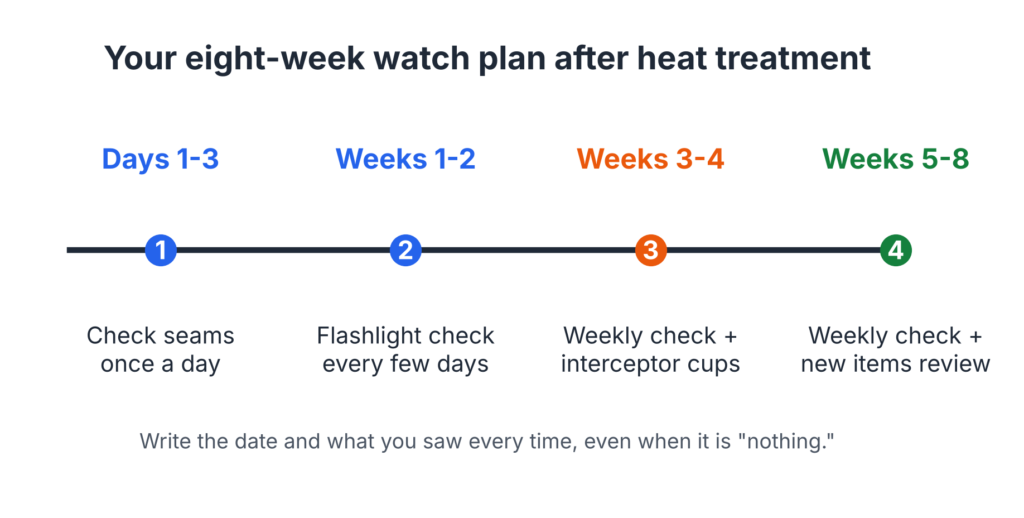
- First three days: put on clean sheets, keep the bed where it is, and check the seams once a day. That’s your baseline, and a live bug here points to a missed spot.
- Weeks one and two: go over the bed frame, headboard, nightstands, and baseboards every few days with a flashlight. Early survivors tend to show up in the old spots.
- Weeks three and four: switch to a weekly check, take photos, and set interceptor cups under the bed legs. They catch bugs so you don’t have to hunt.
- Weeks five through eight: keep the weekly check and add a look at luggage, bags, and any used furniture that came in. Clean weeks here? A good sign the job held.
Jot down the date and what you saw every time, even if the answer is nothing. Four clean weeks in a row? That’s a strong sign. One bug with weeks of quiet on both sides usually reads as a new arrival, not a failed treatment.
What puts a heat job at risk before it even starts
A treatment is only as good as the prep behind it. A few habits cause most of the cool pockets.
- Overstuffed closets and drawers. Dense piles insulate what’s inside. Loosen things up.
- Sealed bins and bags left in the room. They slow the heat. Ask the crew what stays and what goes.
- Furniture pushed flat against the wall. A few inches of space lets hot air reach the baseboard.
- Items moved to another room. The bugs can travel along and come back later.
- Skipping the laundry step. A loosely filled dryer on high for about 30 minutes handles clothes and bedding, as the Virginia fact sheet describes.
In Houston, plenty of us use the garage, attic, or a closet for storage. Boxes coming back from those spaces? Give them a quick look before they go into a treated room.

What not to do after a heat treatment
Don’t spray store-bought bug products around the room. They scatter bugs into new areas and hide the real pattern (and bed bug foggers are no better).
Don’t switch to a different bed. Sleeping elsewhere spreads bugs and blurs the pattern.
Don’t rush to throw out furniture. Dragging infested pieces down a hallway spreads bugs. Ask someone first.
Don’t bring stored bags and boxes back in until you’re sure. New arrivals are the easiest problem to prevent, so be patient.
Don’t stop checking after one clean week. The routine matters more than any single look.
How long should I wait after heat treatment before worrying?
So, do bed bugs come back after heat treatment? Sometimes they do, and no single number fits every home. Bugs seen in the first week or two can still be survivors from a cool pocket. Bugs still showing up after several weeks, in the same spots? Something needs another look. One bug, long after a quiet stretch? More often a new arrival. The pattern over time is what counts, and that’s why those dated notes pay off.
Frequently asked questions
How long does it take to get rid of bed bugs after heat treatment?
Bugs in the areas that reached the target temperature die during the visit. Any you see later are survivors from a cool pocket or new arrivals, so judge by the pattern over several weeks, not one sighting.
Why am I still seeing bed bugs after a heat treatment?
Usually it’s a cool pocket that never got hot enough, an item that skipped the heat, or a bug brought in after treatment. Heat leaves nothing behind, so anything new meets no barrier.
Is it normal for bed bugs to come back after treatment?
Seeing a few is common enough to expect. A steady return in the same room, week after week, is the signal to ask someone to take a closer look.
How do I know if the bed bugs are gone?
Four or more weeks of clean checks, with interceptor cups under the bed legs and dated notes, is a strong sign. One quiet week isn’t enough.
Can I sleep in my bed right after heat treatment?
Follow the instructions from the crew who did the work. Either way, keep the bed in the same place and don’t move to a different room.
Does a bed bug in an apartment mean the treatment failed?
Not by itself. Bugs can move between neighboring units, so a clean apartment next to an active one can be exposed again.