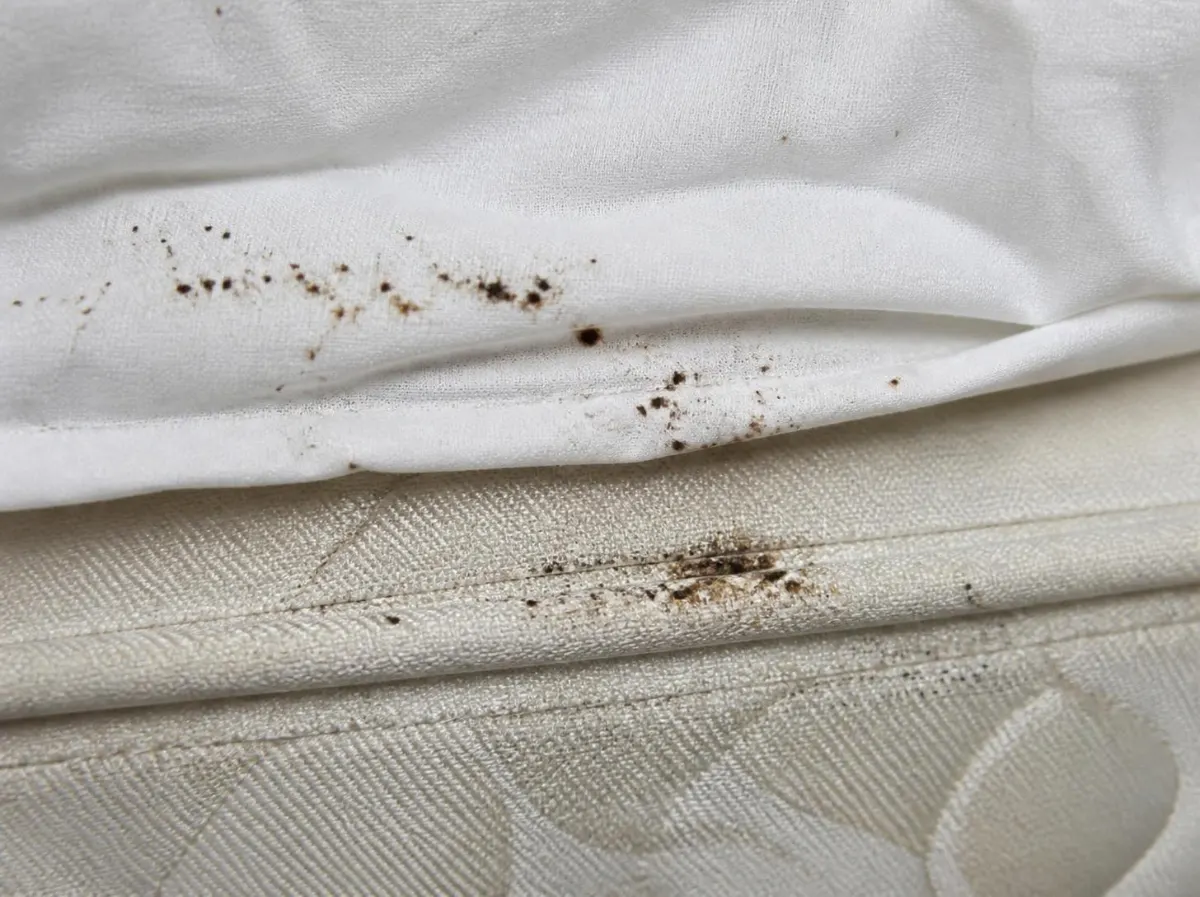
What do bed bug stains look like? Mostly tiny dark-brown or black dots about the size of a pen tip, plus rust-colored smears where a bug was crushed or a bite bled onto the sheet. The dark dots are bed bug droppings, and they usually sit in clusters along mattress seams, sheet edges, and the headboard. The easiest giveaway: press a damp white cloth on a fresh dot, and it tends to bleed a reddish-brown smear instead of lifting off like ordinary dirt.
Quick Facts: Bed Bug Stains
- Color: dark brown to black for droppings, rust red to dark brown for blood spots.
- Size: pinhead to pen-tip dots, with smears no bigger than the bug itself.
- Pattern: clusters or lines near seams, folds, and edges, not a single random spot.
- Smear test: a damp cloth pressed on a fresh dropping usually picks up a rusty tint.
- Where: mattress seams and tags, sheets, pillowcases, the headboard, and the box spring.
What Do Bed Bug Stains Look Like? The Three Types at a Glance
Bed bugs leave three kinds of marks on bedding. They are easy to confuse, so the chart below puts color, size, pattern, and a quick test side by side for each one.

1. Bed bug droppings (dark spots)
Droppings are the most common bed bug stain, and the one people notice first. Bed bugs digest blood quickly and leave a small, liquid dot behind, so the mark soaks into fabric and looks like someone touched the sheet with the tip of a fine felt pen. Fresh droppings are dark brown to black and sometimes slightly glossy. They rarely appear alone: expect a cluster of several dots, or a short line of them along a seam where the bugs travel back to their hiding spot.
Because the spots are liquid when they land, they bleed into the weave. That is why they are hard to scrub off cotton sheets and why they leave a faint halo around the dot. On hard surfaces, such as a wooden bed frame, dried droppings sit on top and can usually be scraped or wiped away.
2. Blood spots and rust-colored smears
Rust-colored or reddish-brown marks have two common causes. A bite can keep bleeding a little after the bug has moved away, leaving a small spot on the sheet. Or a partly fed bed bug gets rolled over in your sleep and leaves its last meal behind as a smear. Either way, the color starts bright red and darkens to rust brown or dark brown as it dries. Sizes range from a pinpoint to a mark a few millimeters across, and the spots show up most often near the pillow end and along the sides of the bed where your arms and shoulders rest.
3. Crushed-bug streaks and what sits beside them
A longer, rusty streak is usually a crushed bed bug. Look closely at the edges: you may find a flat, translucent husk or a few pale shed skins next to the stain. Those shells are cast-off skins from each growth stage, and finding them beside spots is far stronger evidence than the stain alone. Our complete guide to bed bug shells and molts shows exactly what to look for. Tiny pearly-white eggs, around one millimeter long, may also be glued into seams close to the spots.
Where Bed Bug Stains Show Up First
So what do bed bug stains look like on a mattress compared with sheets? On sheets they show up as dark dots or rust smears near the pillows and edges, while on a mattress they gather along the piping, seams, and tag. Bed bugs hide within a few feet of where you sleep, so the stains cluster there too. Most people only strip the top sheet, which means the best evidence is often one layer deeper. Start with the numbered spots on the map below and work outward.


On the mattress, run a flashlight slowly along the piping and the stitched seams, then lift the tag and check underneath it. Move to the box spring next: bed bugs love the folded fabric on its underside and the staples around the frame. Then check the headboard joints and screw holes, and the wall behind the bed. If you see stains on the wall or baseboard near the bed, that often points to a larger, older problem, because bugs only spread outward once the nearest hiding places are crowded.
Fresh vs Old Bed Bug Stains
So what do bed bug stains look like as they age? Age changes how a stain looks, which helps you tell whether bugs are active right now. Fresh spots are darker, a little glossy, and they smear when touched with a damp cloth. Older spots dry out, turn flatter and duller, and often fade toward brown. Old stains on a mattress you have used for years can simply be history, while new dots that appear a day or two after you wash the bedding are a strong sign that bugs are still feeding. A simple habit helps: wash the sheets, put on a clean set, and check the same corners again over the next two or three mornings.
Is It Really a Bed Bug Stain? Common Lookalikes
Plenty of things leave dark dots on bedding. Houston’s humidity makes mold specks on mattresses and headboards common too. The table compares the most frequent lookalikes.
| Mark | Color and shape | Smear test | Where it shows up | Other clues |
|---|---|---|---|---|
| Bed bug droppings | Dark brown or black dots, pinhead to pen-tip size, in clusters | Bleeds reddish-brown on damp cloth | Mattress seams, sheet edges, headboard, box spring | Shells, rust spots, bites on exposed skin |
| Bed bug blood spots | Rust red to dark brown dots or short smears | Dries stiff, may lighten when dampened | Pillow end and sides of sheets | Bites, crushed bugs, droppings nearby |
| Flea dirt | Tiny black specks that look like ground pepper | Turns reddish when wet | Pet beds, carpet, around ankles and feet | Pets scratching, bites on lower legs |
| Cockroach droppings | Specks like coffee grounds or pepper; larger roaches leave small cylinders with ridges | Little color change | Kitchens, bathrooms, behind appliances, cabinets | Musty odor, egg cases, daytime sightings |
| Mold | Fuzzy, powdery, or speckled green, black, or white patches | Spreads or smudges, no red color | Damp mattress undersides, closets, headboards | Musty smell, humid room |
| Ink or dirt | Uniform marks, often one-off | Smears blue, gray, or brown | Anywhere, usually not in clusters | No shells, no bites |
If the mark looks more like an insect than a stain, our guides to whether bed bugs look like ants and to small red bugs in the house cover the common mix-ups.
The 60-Second Smear Test
If you are asking “what do bed bug stains look like” about marks on your own sheets, this quick check will not diagnose an infestation, but it helps you separate bed bug droppings from ordinary dirt before you decide what to do next.
- Dampen a white cotton pad or paper towel with plain water.
- Press it lightly on one dark dot without rubbing.
- Look at the cloth. A rusty tint on the cloth suggests digested blood, which fits bed bug droppings (flea dirt can do the same, so check where you found it).
- Photograph the spot and the cloth in good light, then check the surrounding seams for shells and eggs.
- Repeat on two or three other dots in different spots before drawing a conclusion.
What Stains Can and Cannot Tell You
Stains show that bed bugs, or something similar, have been on the bed. They do not tell you how many bugs there are, whether the problem is new, or whether the bugs are still around. A single stain on an old mattress means little. Several fresh clusters, plus bites that appear after sleeping, shed skins in the seams, or a faint sweet, musty odor, point to an established problem. Bite marks alone are unreliable, since mosquito and flea bites can look similar, so treat them as one clue among several.
Found Stains? What to Do Next
Resist the urge to spray the room or throw the mattress out right away. Over-the-counter sprays and foggers often push bed bugs deeper into walls and nearby rooms, and moving infested items through the home can spread the problem. These steps are safer:
- Photograph the stains, shells, and any live bugs in good light, with a coin or ruler beside them for scale.
- Strip the bed and bag the bedding. Wash it hot and dry on high heat for at least 30 minutes, since heat is what kills bed bugs at every life stage.
- Vacuum seams, tags, and the bed frame, then empty the vacuum into a sealed bag outside.
- Put zippered bed bug encasements on the mattress and box spring so you can see new stains clearly and trap what is inside.
- Pull the bed a few inches from the wall and keep bedding from touching the floor.
Found stains and not sure what they mean?
Speak with a local Houston bed bug specialist today. We connect homeowners and renters with local pros who can identify what is on your bedding and explain the next steps, usually with a fast response.
Call to Speak With a Local Bed Bug SpecialistWashing and encasements deal with the bedding, but they do not reach the bugs in furniture joints, outlets, and wall voids. If you are finding fresh stains, the next step is to have a local bed bug exterminator in Houston look at the room, and a visit from a specialist can confirm what you have. For confirmed infestations, bed bug heat treatment in Houston raises the room to a temperature that targets bed bugs and eggs, usually in a single visit. If you only want confirmation first, a professional inspection is the lighter step. Renters should read our notes on bed bugs in Houston apartments and report the problem to the landlord in writing.
Frequently Asked Questions
Are bed bug stains always blood?
No. Most bed bug stains are droppings, which are digested blood and look like tiny dark-brown or black dots. Actual blood spots are rust red to brown and come from bites that keep bleeding or from a crushed, freshly fed bug. Both can appear on the same sheet.
Do bed bug stains wash out?
Fresh marks often fade with a hot wash, but older droppings can leave a faint ring in cotton or mattress fabric. Washing cleans the sheet without removing the bugs, so keep checking the seams afterward.
What color are bed bug droppings?
Fresh droppings are dark brown to black. As they dry they turn duller and can fade to a light brown. If a damp cloth picks up a rusty smear, the dot is probably digested blood.
How big is a bed bug stain?
Droppings are usually tiny, no bigger than a pinhead or the dot from a pen. Blood spots range from a pinpoint to a few millimeters, and a crushed-bug streak is about as long as the bug itself, roughly the size of an apple seed.
Can I have bed bugs without any stains?
Yes. In an early infestation there may be only a few bugs and no visible marks. Bites that appear after sleeping, shed skins, or a live bug are other signs to look for. If you suspect bed bugs but cannot find stains, check the box spring and headboard joints with a flashlight.
Are stains on the wall bed bug stains?
They can be. Bed bugs may leave droppings or smears on baseboards and walls near the bed, especially in heavier infestations. Compare the dots with the table above, because mold and ordinary dust marks are common on walls too.
What do bed bug stains look like on white sheets?
On white sheets, bed bug stains look like tiny dark-brown or black dots, often in a small cluster, plus occasional rust-colored spots or short smears. They show up most often near folds and corners, along the edge of the sheet where bugs travel.
What do bed bug stains look like on a mattress?
On a mattress, bed bug stains usually gather along the piping, stitched seams, and under the tag as small dark dots. On darker or patterned fabric they can be hard to see, so check with a flashlight held at a low angle.
Bed Bug Help Across Greater Houston
Wherever you live in the metro area, the signs above are the same. If you are dealing with stains and want local help nearby, see our pages for bed bug treatment in Katy, Spring, Cypress, Sharpstown, and Missouri City.
In short, what do bed bug stains look like? They are small dark dots and rust-colored smears clustered along seams, edges, and headboards, and the damp-cloth test is the fastest way to tell them from dirt. A stain is a clue, so look for shells, eggs, or live bugs before deciding what to do.
Source: identification details reflect bed bug characteristics documented by the EPA’s bed bug identification resource. Houston Bed Bugs connects Houston-area residents with local bed bug specialists and is not itself a pest control provider.