
Maybe you spotted a bug, a rust-colored speck, or a couple of shed skins, and now there’s a pile of laundry on the floor and one question on your mind: what do I do tonight? Does the dryer kill bed bugs on all of it? For anything washable, yes. It’s the right first move, provided you run it properly and don’t count on it to fix more than it can.
The quick answer
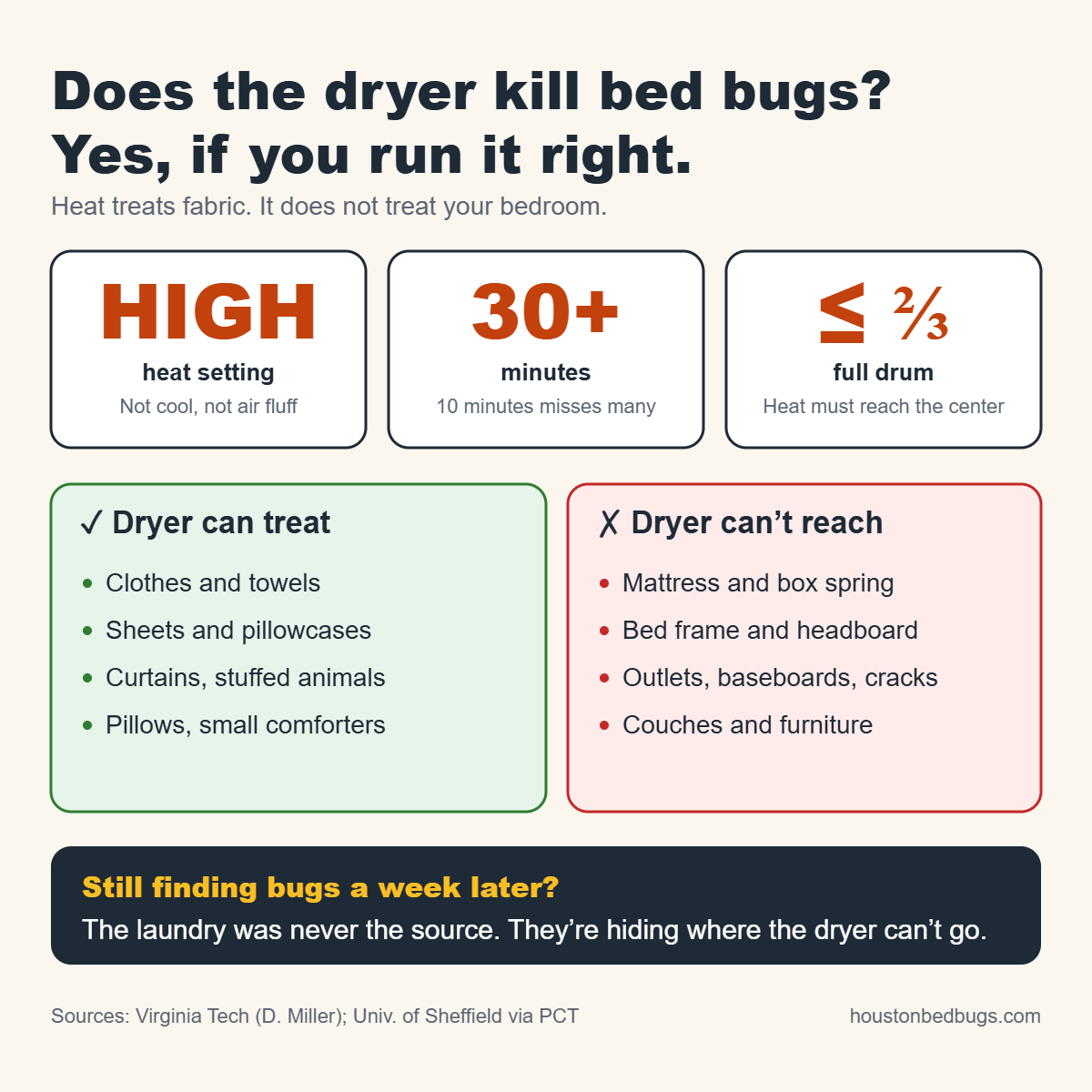
Does the dryer kill bed bugs? Yes, eggs included, when the load runs on high heat for at least 30 minutes. The heat has to reach the bugs tucked deep in the fabric, which is why a loose load beats a fancy cycle. Ten minutes, or a cool setting, leaves a lot of them crawling. Here’s the catch: it only treats what you toss in. Your mattress, bed frame, outlets and the cracks where most of the colony lives never see the drum, so a dryer helps but rarely ends an infestation.
How hot does a dryer have to get to kill bed bugs?
Bed bugs aren’t hard to cook. Virginia Tech entomologist Dini Miller’s lab numbers put the lethal point around 113°F if the bugs sit at that temperature for 90 minutes or more, and at 118°F they’re gone in about 20 minutes. Eggs are tougher. They need about 118°F for roughly 90 minutes before every one is dead.
A dryer on high clears those numbers easily, with one catch. The air inside the drum runs hotter than the middle of a damp, tightly packed bundle, and the middle is where bugs hide. So what counts is how long the center of the load stays hot. So 30 minutes or more on high is the usual advice, and a stuffed drum is the usual reason it fails.
Checkpoint: got a dryer that only offers low, medium and air fluff? Take the hottest setting the label allows and add minutes instead. Anything too delicate for heat can go to a dry cleaner. Tell them first and bring the items in a sealed bag.
How long should you run the dryer?
You’ll see thirty minutes on high quoted everywhere, and it holds up. In a University of Sheffield study written up in Pest Control Technology, researchers sealed bed bugs in cotton bags and buried them in loads of linens and clothes. A hot tumble of at least 30 minutes on a load of about 7.7 pounds got hot enough to kill them. A 10-minute hot cycle didn’t: about 75 percent of nymphs and 85 percent of adults died, which leaves plenty alive. The cool cycle barely touched them.
Not every source sets the bar that high. The University of Kentucky entomology fact sheet says 10 to 20 minutes on medium-to-high heat is enough, with at least 120°F for hot drying. That can work for a small, dry load, but Sheffield’s 10-minute failures show how little margin there is, and a damp or crowded drum heats slowly. So 30 minutes is the safer default.
Boiled down, it looks like this:
- Pick the hottest setting the fabric allows. Skip cool, air-fluff and permanent-press, since they won’t kill much.
- Run it 30 minutes or more once the load is warm. A bulky comforter or pillow can take 45 to 60.
- Don’t fill the drum past two-thirds. Stuff it and the heat never reaches the middle of anything.
- Don’t start the clock right away. Count from when it’s actually hot, not when you hit start.
Does the dryer kill bed bugs on wet or dry clothes?
Already clean and dry? Skip the wash and put them straight in on high. It’s the heat that kills them, and dry fabric heats up faster than a soaked load.
Worn or dirty clothes need a wash anyway, and the same Sheffield work gives a handy yardstick. A 30-minute cycle in 140°F water killed every life stage. At 100°F, adults and nymphs died but roughly three-quarters of the eggs lived. So a cool or lukewarm wash isn’t a treatment by itself, and whatever you wash still goes in the dryer for the full time.
What the dryer can and can’t treat
This is where plenty of people lose the fight. A dryer is great on a short list of things and no use on the rest.
Good candidates: clothing, sheets and pillowcases, towels, curtains, loose-fitting blankets, stuffed animals, and any pillow or small comforter that tumbles freely. Does the dryer kill bed bugs on all of these? Yes, as long as the heat stays high.
Poor candidates: mattresses, box springs, headboards, couches, bookshelves and heavy rugs, anything that won’t tumble. Delicates can melt, shrink or scorch, so check the label before you gamble on heat. Does the dryer kill bed bugs in a mattress or couch? Not a chance, since neither one fits in the drum.
If your dryer has a removable rack, it can sometimes handle shoes, hats or small hard items, though results vary, and extension guidance warns that anything that can’t tumble may need extra time. Call that a bonus, not a plan.
Why a clean load of laundry can still lead to more bed bugs
Plenty of households follow the same script. They strip the bed, wash and dry everything on high, and figure it’s handled. A week later there are new bugs. Does the dryer kill bed bugs in those sheets? Sure it does. The laundry just was never where they came from.
Most of the time, adults and nymphs sit where clothes never go: mattress seams, bed frame joints, behind the headboard, inside nightstands, along baseboards, behind outlet covers and in the creases of upholstered furniture. A dryer can’t reach any of it, and neither can a washer. You can kill every bug in your sheets and still have a working colony four feet away.
Checkpoint: washed and dried the bedding on high, yet new bugs or fresh spots keep turning up over the next few days? Then they’re living somewhere the laundry can’t reach, and doing more laundry won’t change that.
The mistakes that undo a good dryer cycle
Most failed attempts trace back to a few habits. Easy to fix once you spot them.
Carrying clean laundry back through the problem. Dry a load, then toss it back on an infested bed or into an infested closet, and the clock just resets. Bag or bin finished items right away, clean and sealed, and keep them out of the bedroom until the room’s been dealt with.
Treating dirty clothes in a shared machine. In Houston, apartment complexes and laundromats often share washers, dryers, folding tables and cart baskets. So carry infested items in a sealed bag, load them straight in, and pull them out into a fresh one. Skip the shared folding table. Bugs that drop in a shared space can spread to other units, which is how infestations move through buildings, as covered in our guide on how bed bugs spread in apartments.
Skipping the dryer for “just washing.” Washing alone isn’t enough, particularly with cool or warm water. The heat from the dryer is the reliable step.
Using a dryer sheet, a hair dryer, or a cool cycle as a treatment. Dryer sheets don’t repel or kill bed bugs, a hair dryer can’t heat a whole load, and cool cycles don’t work. EPA also cautions that do-it-yourself heat treatments might not work, and that heating a room with a space heater is dangerous.
Treating bagging as a replacement for heat. Plastic bags are handy for containing bugs while you work, but sealing something up isn’t killing it. Bed bugs can sit tight for months without feeding, so a bag in a closet clears nothing. The EPA’s do-it-yourself bed bug control page says items you can’t treat may need to stay sealed for up to a year to be sure anything alive is dead, and Kentucky’s fact sheet puts typical survival indoors at roughly two to six months.
A quick note on Houston homes
Bed bugs live indoors, so Houston’s warm, humid weather doesn’t give them a winter break. Apartments, townhomes and condos share walls, and infestations travel through them easily. That’s one more reason to think of the dryer as quick containment, not the whole answer. A lot of Houston households call someone in early, before bugs settle into the walls and furniture.
What to do tonight, in order
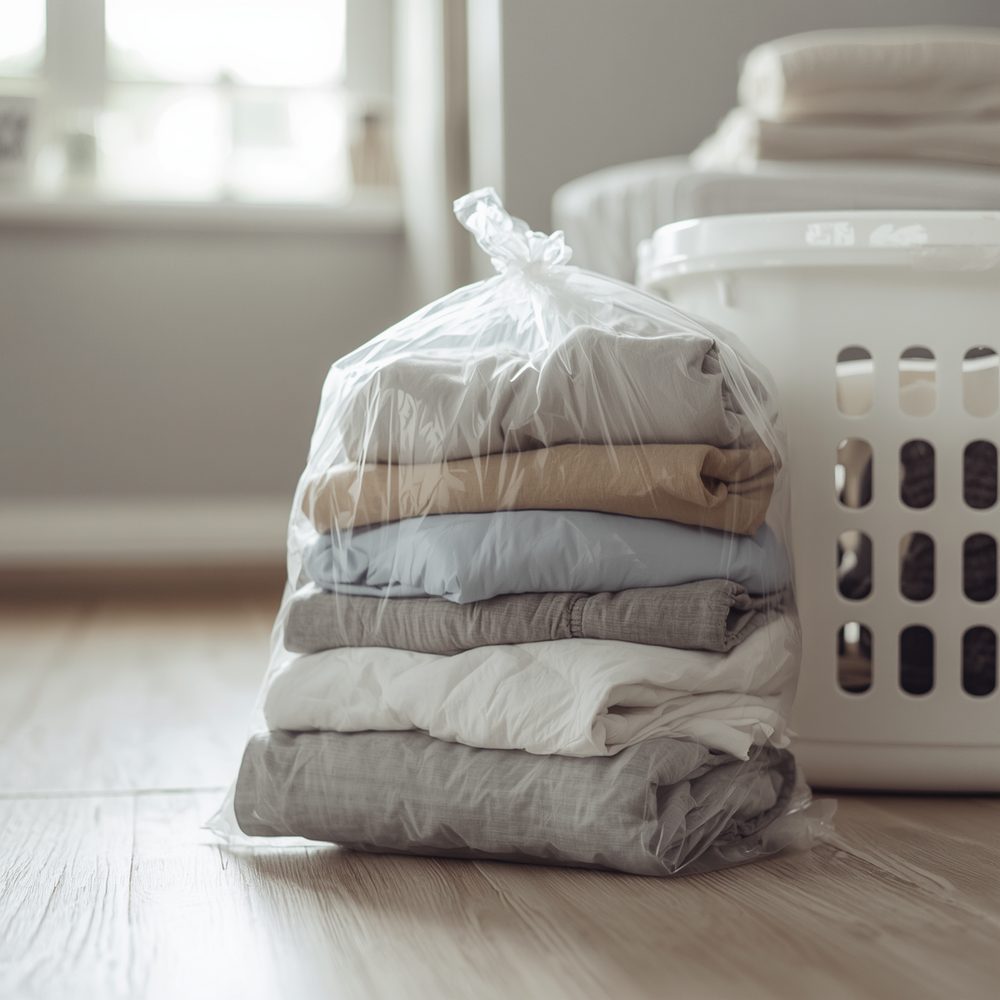
- Bag up clothing, bedding and washable fabrics in the bedroom, sealing each bag, and do it over a hard floor so any dropped bugs are easy to spot.
- Take the bags straight to the laundry area. Don’t set them on furniture along the way.
- Dry items go straight into the dryer on high. Wash first only if they’re dirty, in the hottest water the fabric can take.
- Run at least 30 minutes on high, with the drum no fuller than two-thirds.
- Take the items out straight into a clean bag or bin, and keep that bag well away from the infested room.
- Vacuum the mattress seams, bed frame joints and baseboards, and empty the vacuum outside into a sealed bag.
- Last, look in the spots the dryer can’t reach: behind the headboard, inside the box spring and along the carpet edges.
When laundry stops being enough
Laundry takes care of what you wear and sleep in. What it can’t do is tell you how big the problem is or reach the hiding places. If you’re still finding fresh signs a week after a thorough laundry run, or the bugs turn up in more than one room, this has stopped being a laundry problem. A Houston crew can look over the bed, the furniture and the baseboards, so treatment lands where the bugs actually live. A bed bug inspection in Houston shows how far things have spread, and how Houston bed bug extermination works lays out what happens from the first visit through follow-up.
Do I need a pro? Quick check. Call a Houston bed bug crew if any of these fit: bugs or fresh spots keep showing up after a full high-heat laundry run, signs turn up in more than one room, you share walls in an apartment or townhome, or you just can’t tell where they’re coming from.
Dryer vs. other DIY methods
So does the dryer kill bed bugs more reliably than home remedies? For fabrics it does, since it relies on a lethal temperature instead of a spray that has to land on every single bug. The same principle is why whole-room heat treatment in Houston exists: it brings that lethal heat to the mattress, frame and walls that a dryer can’t touch. Steam can help on seams and furniture where a dryer can’t go, as covered in our guide on whether steam kills bed bugs. Store-bought foggers are another story, and the evidence for them is poor, as laid out in our fogger guide. Disinfectant sprays fall short for the same reason, as explained in why a disinfectant spray can’t reach bed bugs. The dryer’s your best tool for fabrics and your weakest for everything else.
Frequently asked questions
How long does it take a dryer to kill bed bugs?
Figure on 30 minutes or more on high with a loosely filled drum. Comforters and pillows can need 45 to 60. Ten minutes won’t do it.
Does a dryer kill bed bug eggs?
Yes, as long as the heat is high and held long enough. Eggs handle heat better than any other life stage, so short or cool cycles often miss them.
Can I put clean clothes in the dryer without washing them?
Yes. For dry, clean items the dryer’s heat does the work. You only need to wash if they’re dirty.
What setting should the dryer be on?
High heat, or the hottest setting the fabric label allows. Avoid cool, air-fluff or permanent-press settings for this purpose.
Will a dryer get rid of an infestation?
No. It only treats the fabrics that go in. Bugs in the mattress, bed frame, furniture and walls carry on untouched.
Sources
Heat thresholds and dryer guidance come from Virginia Tech entomologist Dini Miller’s heat guidance. Laundering results come from Naylor and Boase at the University of Sheffield, summarized in Pest Control Technology. Survival time and the shorter dryer guideline come from the University of Kentucky entomology fact sheet, and the sealed-bag and DIY-heat cautions come from the EPA do-it-yourself bed bug control page.