
The quick answer
Does Lysol kill bed bugs? No. Lysol is not a bed bug treatment. Lysol disinfectants are labeled to kill germs on surfaces, not insects. The EPA label for one common Lysol cleaner never mentions bed bugs or any insect, and nothing on it supports using the spray to get rid of an infestation.
Here’s the bigger problem: bed bugs don’t hang out on the surface. They sit in seams, frames, cracks and outlets, places a spray never reaches. And the eggs are a whole separate matter.
If you are still finding bugs after spraying, the next step is a specialist who treats bed bugs.
Last checked against EPA sources: November 2026.
What Lysol is, and what its label actually covers
Lysol is a household disinfectant brand, and its sprays, wipes and cleaners are made for hard surfaces like counters, doorknobs and bathroom fixtures. A product that makes germ-killing claims in the United States is registered with the EPA, and its label spells out exactly which organisms it’s approved for.
What the label lists
So, does Lysol kill bed bugs, going by its own label? The label for Lysol Brand Disinfectant Direct Multi-Purpose Cleaner (EPA Reg. No. 777-66) covers specific bacteria, viruses, mold and mildew, odors, and allergens on surfaces. Look for the words “insect”, “bed bug” or “pest” and you won’t find them anywhere on it.
The active ingredients are quaternary ammonium compounds. Those are germ-killers, not insecticides. Other Lysol products carry their own labels, so read the one on your can.
How the product is meant to work
The directions show how it’s meant to work. You apply it to a pre-cleaned surface, leave it visibly wet for a set contact time, then wipe it dry. That’s a disinfecting step. It isn’t a barrier that keeps working once it dries.
There’s also a hazard warning for eye injury. Treat it like the chemical it is, not like a harmless household spray.
What the EPA says about bed bugs
The EPA’s bed bug guidance is blunt about this: use only EPA-registered pesticides that list bed bugs on the label. A disinfectant label that never mentions bed bugs fails that test.
Why a spray can’t clear an infestation
Even a product approved for bed bugs would struggle with a surface spray alone. The real problem is hiding places, and the EPA’s own steps show just how many there are.
Its guidance has homeowners seal cracks and crevices with caulk, vacuum and bag the contents, cover mattresses and box springs with sealed encasements, and check traps under furniture legs every week. Notice what’s missing? Nothing on that list involves spraying a visible bug.
Foggers fall short for the same reason. They don’t reach the cracks and crevices where bed bugs hide, and the EPA says they should never be the only method you use.
A hand-held disinfectant spray has the same limit. It wets what it touches and leaves the rest alone. Mattress seams, bed frame joints, the back of a headboard, baseboards and outlets are all spots a spray can’t soak.
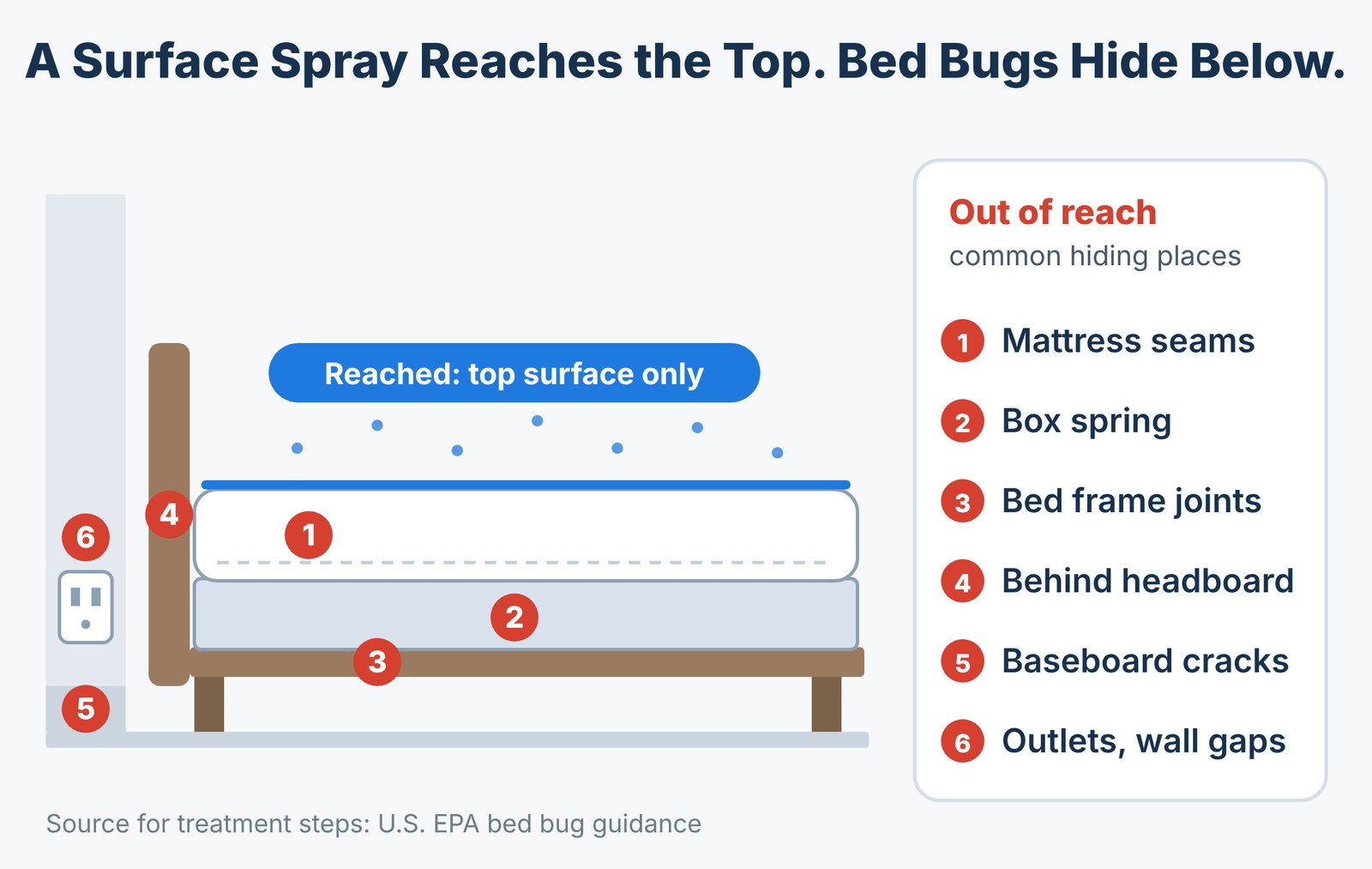
Then there’s time. The EPA says bed bug control can take weeks to months, that everyone in the home has to take part, and that you should keep checking for at least a year.
One round of spraying doesn’t fit that timeline. Bugs and eggs in seams and cracks stay out of reach, which is why the EPA says the cleanup steps may need repeating.
Spraying more and more when it isn’t working carries its own risk. A disinfectant was never meant for insects, so it’s no safe place to start experimenting. And some of the fixes people try next are worse, as the remedies section below shows.
Bed bug eggs: why one round of spraying never finishes the job
Eggs are the reason a spray that seems to work so often fails. The EPA describes them as about 1 mm long and pale yellow, which makes them easy to miss on a pale seam or tag.
- They add up fast. A female may lay 1 to 3 eggs a day and 200 to 500 over her lifetime, according to the EPA.
- Six life stages. Each stage needs a blood meal and a molt of skin before the bug can move on.
- A month or so per generation. Under favorable conditions the cycle from egg to egg takes four to five weeks.
- Long-lived adults. The EPA gives a lifespan of 6 to 12 months, possibly longer, and says adults must feed at least once every 14 days to keep mating and producing eggs.
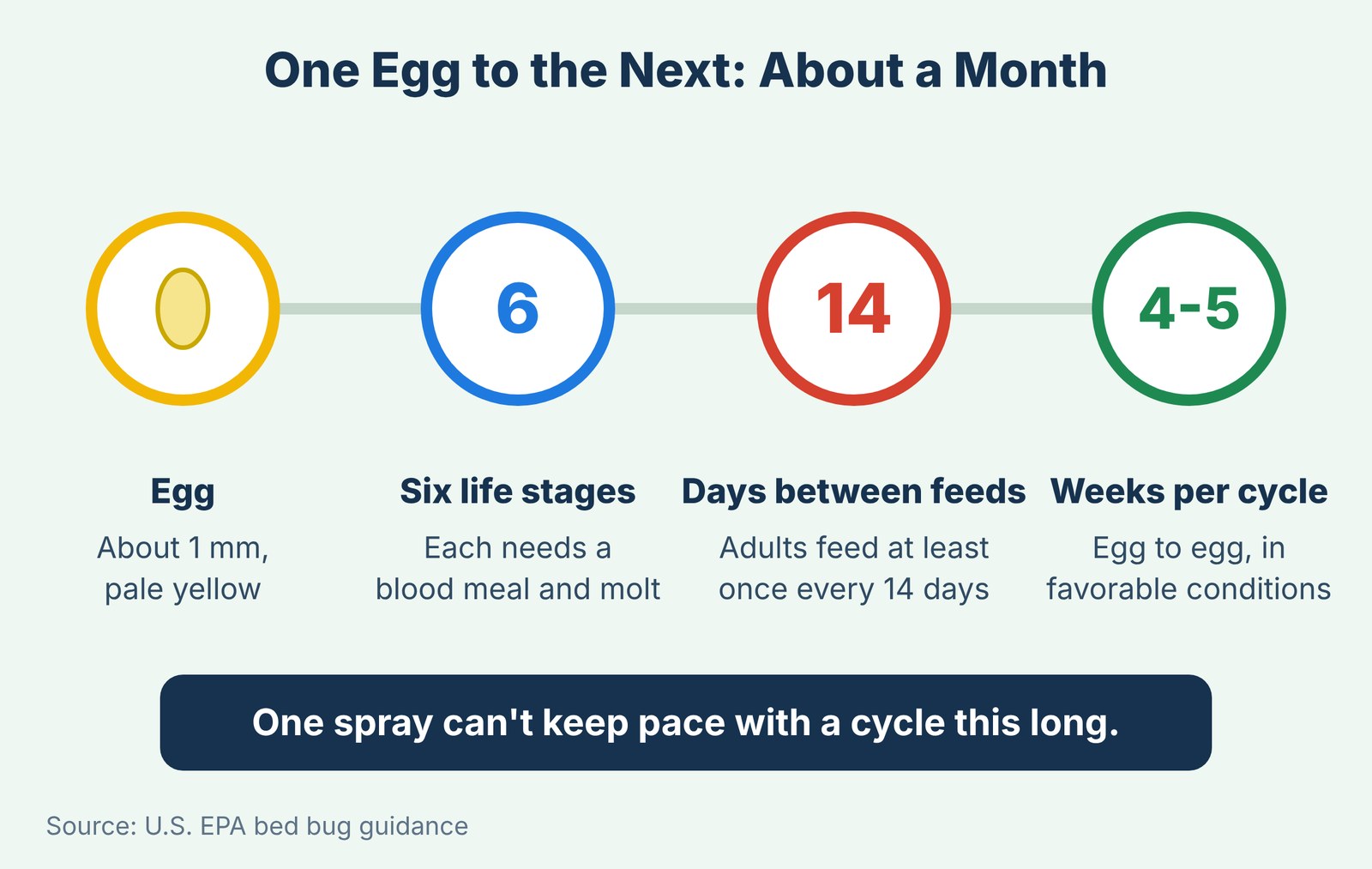
So even if a spray did hit some bugs, the eggs tucked into seams are a separate problem. That’s why the EPA says you may need to repeat the cleanup steps more than once, and why it recommends inspecting at least every 7 days for remaining eggs. The guide on how fast bed bugs multiply shows how quickly those numbers climb.
Other home remedies people try after Lysol
When a spray doesn’t work, the next idea is usually another home fix. Here’s what the EPA says about the common ones.
- Rubbing alcohol, kerosene or gasoline. The EPA says these could harm you and your family and can ignite easily.
- Foggers. The spray does not reach the cracks and crevices where bed bugs hide, and misuse can cause a fire or explosion.
- Sticky traps. The EPA states that sticky traps are not for bed bugs. Interceptor traps under the bed legs are the monitoring tool.
- Raising the house temperature. Using a thermostat, propane space heater or fireplace does not work and is dangerous.
- A dryer or a hot closed car. These might not work, and the result depends on the climate.
- A home freezer. Many are not cold enough to kill bed bugs. The EPA calls for 0 degrees F for three days in a sealed bag, checked with a thermometer.
- Pool or food-grade diatomaceous earth. The EPA says not to use it, since breathing it can cause harm.
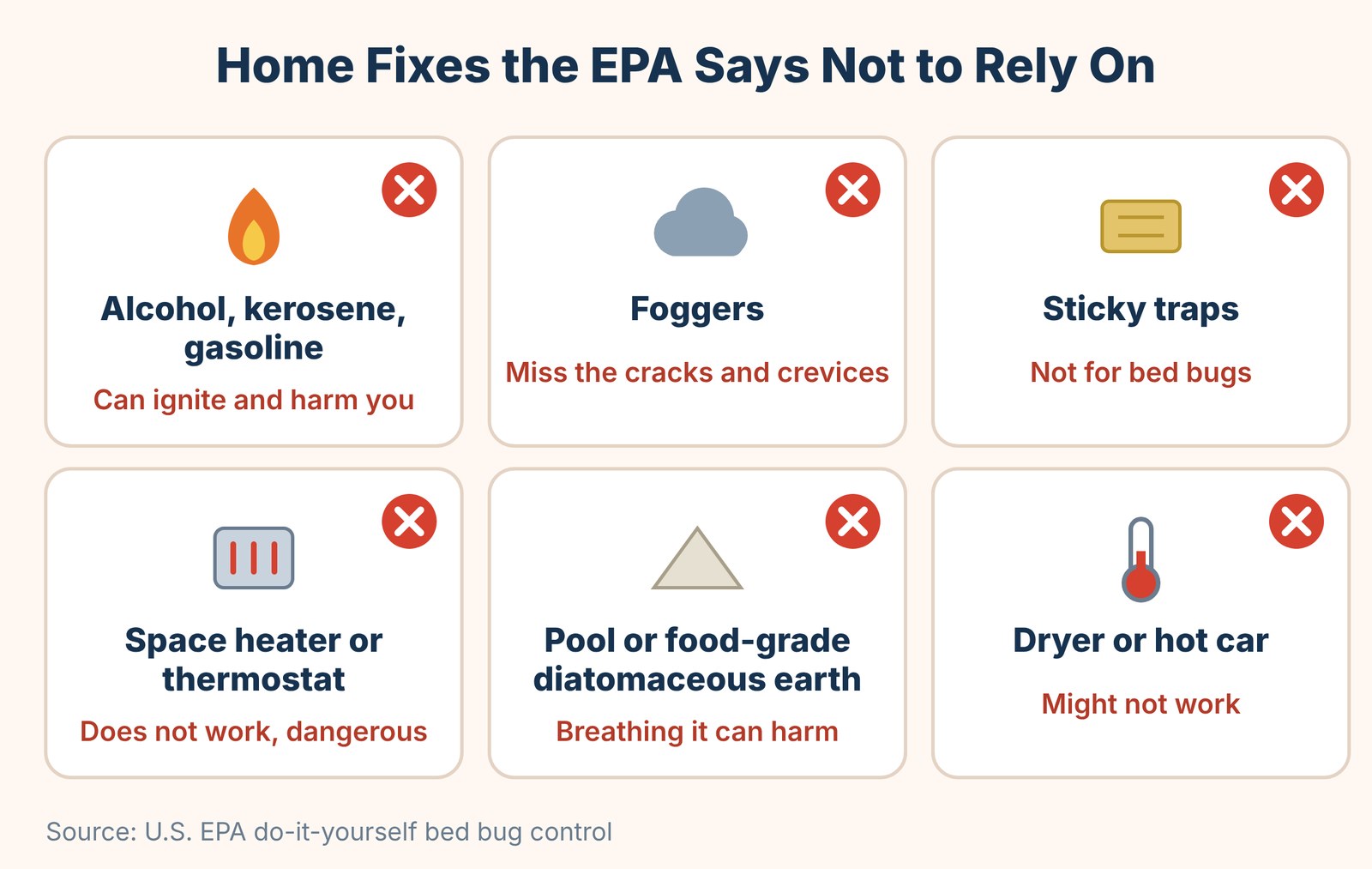
The safe options are slow, have to be combined and have to be repeated, which is the part a specialist handles. Vinegar is another popular fix, and the guide on whether vinegar kills bed bugs covers it.
If you have already sprayed: what to do now
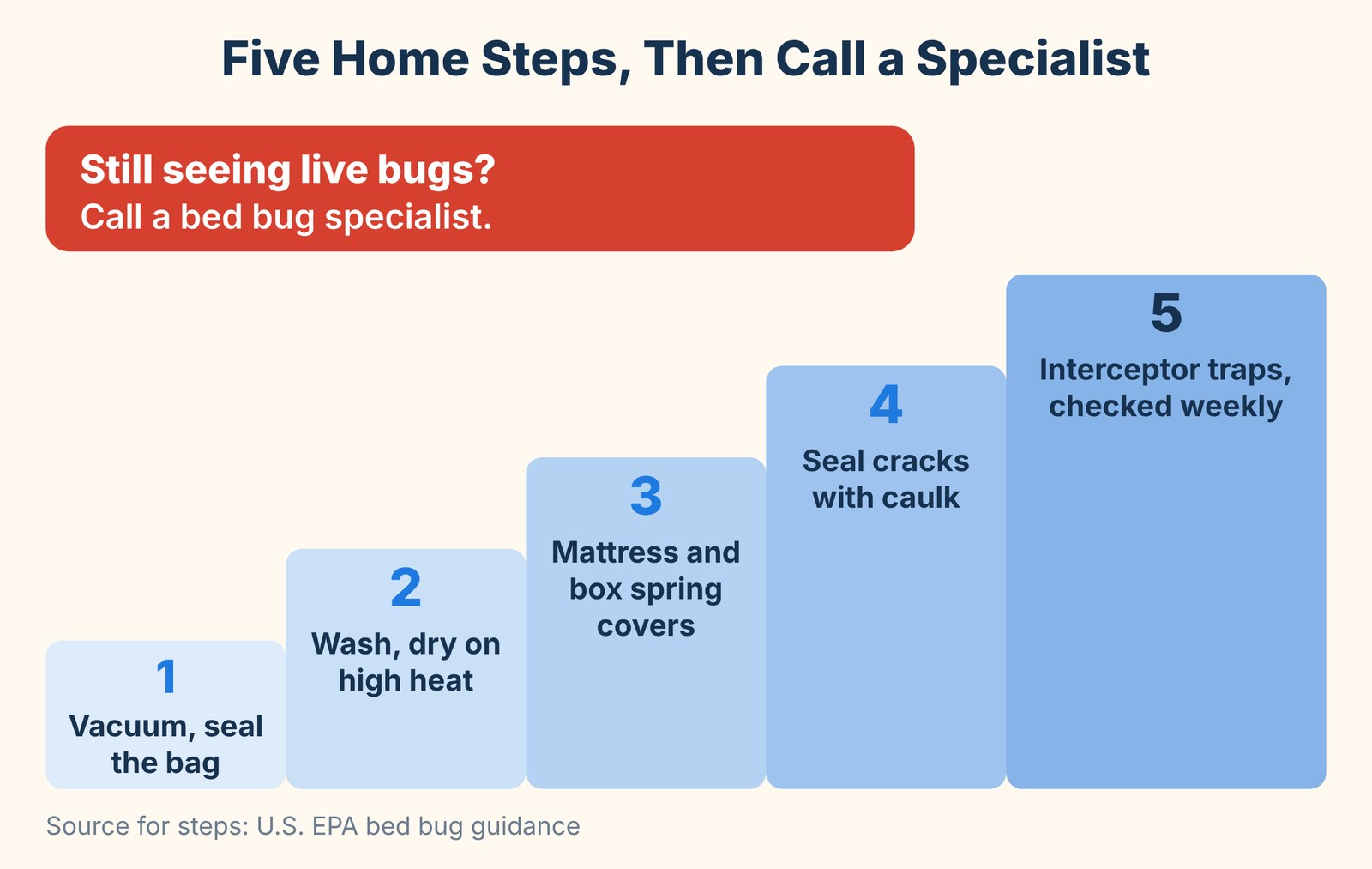
If you have already used Lysol, switch to steps the EPA actually supports.
- Stop spraying the area. Let the surfaces dry and air the room out. Follow the safety directions on the can, including the eye-injury warning.
- Vacuum, then seal the bag. Go over the mattress seams, bed frame, baseboards and the edges of carpets, then tie the bag tightly and put it in an outdoor bin.
- Wash and dry fabrics on high heat. The EPA lists a clothes dryer on high heat as a home option. The guide on what a dryer cycle does and doesn’t kill covers the detail.
- Use sealed mattress and box spring covers. Bugs trapped inside the cover can’t feed and eventually die.
- Seal the cracks you can see. Silicone caulk closes gaps along baseboards and around the bed frame, which cuts down the hiding places.
- Put interceptor traps under the bed legs. Check and clean them weekly so you know whether bugs are still active.
Steam can help on seams and furniture if it’s hot enough and used with a diffuser, so it doesn’t scatter the bugs. The steam and bed bugs guide goes through how to use it.
Skip foggers. The EPA says they don’t reach the places bugs hide, and the guide on whether bed bug foggers work explains why they so often disappoint.
Keep checking the traps and your bedding for the next several weeks. If live bugs keep showing up after you’ve cleaned, sealed and treated, the infestation is bigger than home steps can handle.
How to tell it is really bed bugs
Before you treat anything else, make sure it’s actually bed bugs. The EPA lists these signs:
- Rusty or reddish stains on sheets or mattresses, from bugs that were crushed.
- Dark spots about the size of a bullet point. This is bed bug waste, and it can smear on fabric like a marker.
- Eggs and shed skins. Eggs are about 1 mm and pale yellow, and nymphs leave behind the skins they shed as they grow.
- Live bugs. Adults are thin enough that any crack that holds a credit card could hide one.
Where to look first:
- The piping, seams and tags of the mattress and box spring
- Cracks in the bed frame and headboard
In a heavier infestation, check:
- Chair and couch seams and the gaps between cushions
- Curtain folds and drawer joints
- Electrical outlets and under loose wallpaper
Can’t tell what you’ve found? The EPA notes that a local extension agent can identify a sample. Found just one? The guide on what to do if you find one bed bug covers the first steps.
How big is the problem? A quick self-check
This is a rule of thumb, not an EPA threshold. Use it to decide how soon to get help.
- Signs in one spot only. A bug or two, or a few stains, at the mattress edge or box spring seams, noticed recently. The home checklist above is worth trying, with traps to confirm.
- Signs beyond the bed. Bugs or stains on couches, chairs, curtains, drawers or outlets. The EPA lists these places for heavier infestations, so bring in a specialist sooner.
- Signs in more than one room, or after one full round of cleaning, sealing and traps. If live bugs still show up, home steps aren’t enough. It’s time to call.
- Shared walls. If neighbors have bed bugs too, tell your landlord and call, since treating only your unit can leave the source behind.
Not sure which one fits? Call to be connected with a local bed bug specialist in your area, subject to coverage and availability.
Why an exterminator is the better route
So, does Lysol kill bed bugs in any way that clears an infestation? No. For anything beyond a handful of bugs caught early, a bed bug exterminator is the most reliable path. The reasons come straight from what makes home treatment so hard.
- They find the hiding places. A trained technician inspects seams, frames, furniture and walls where an infestation actually sits, instead of treating what is visible.
- They have stronger methods. The EPA notes that professionals can use more intensive options than a homeowner can, including whole-house heat treatment. The guide on whether bed bugs come back after heat treatment explains what to expect afterward.
- They plan for the timeline. Because control takes weeks and sometimes repeat visits, a specialist builds in follow-up and tells you what to watch for.
- They treat the whole problem. Bed bugs travel between rooms and units, so a treatment that stops at one bed can leave the source behind.
If you rent, tell your landlord as soon as you find bugs. The EPA points out that landlords may be responsible for treatment, and in an apartment building the neighbors’ units matter too. The guide on how bed bugs spread in apartments explains why.
Why bed bugs seem to come back
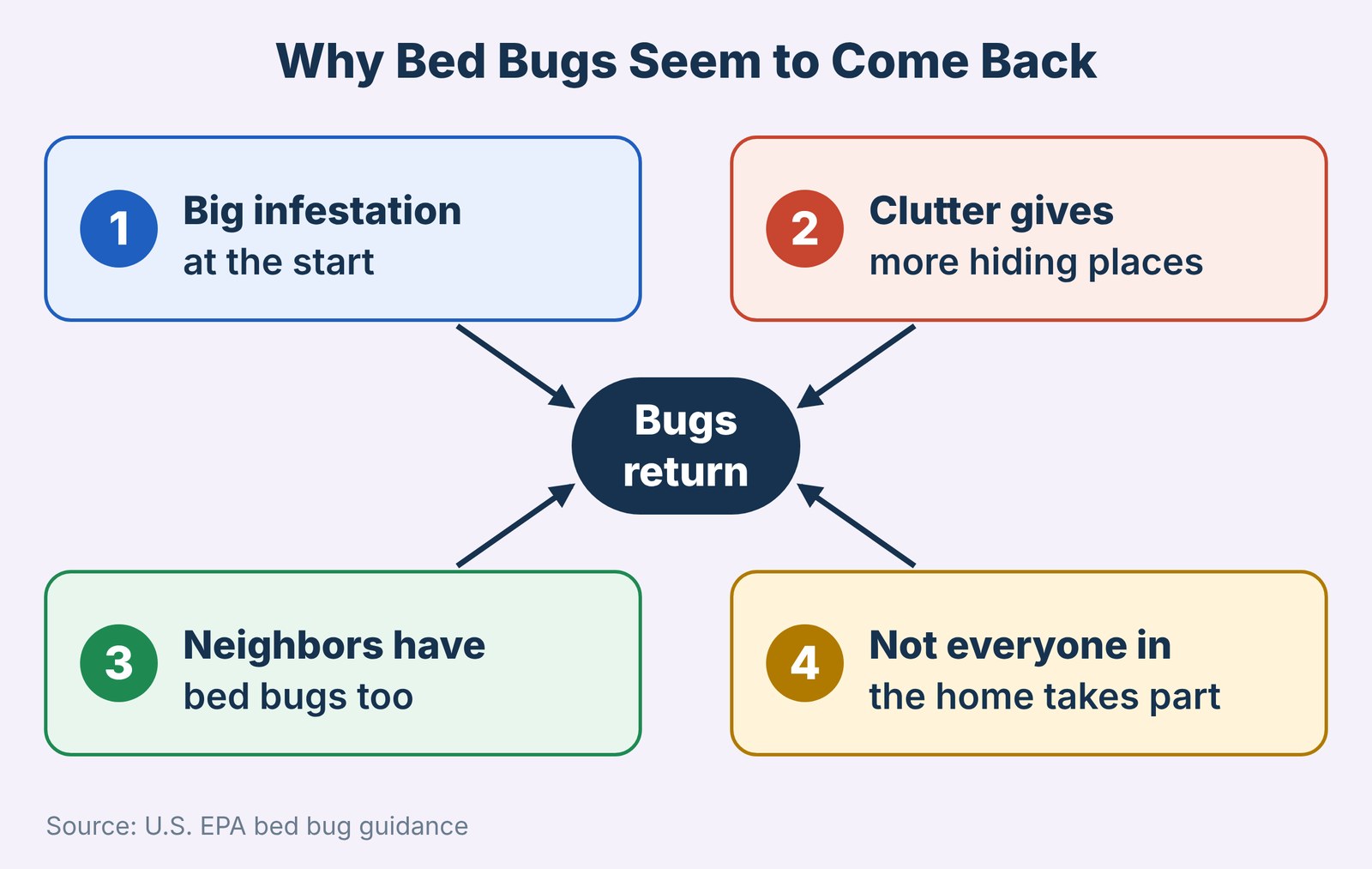
When bugs reappear after a clean-up, the EPA points to four things that decide the outcome:
- How extensive the infestation is when treatment starts.
- How much clutter gives them places to hide.
- Whether neighbors have bed bugs, which matters most in apartments and shared walls.
- Whether everyone in the home takes part in the steps.
Two more causes are easy to miss. Items that weren’t fully treated can still hold live bugs, so the EPA says to keep them sealed for up to a year. And infested furniture that’s simply dragged out can carry bugs into someone else’s home. The EPA says to destroy it or make sure no one brings it in.
Going through that cycle for the second or third time? An inspection by a specialist is usually the faster way to find where the bugs are coming from.
What to have ready when you call
A few details make the call quicker:
- Where you found bugs or signs, and in which rooms
- When you first noticed them
- What you’ve already used, such as Lysol or other sprays, and where
- Whether you rent or own, and whether you share walls with neighbors
- A photo of what you found, if you have one
None of this is required to call, but it saves time on the phone.
Need a specialist? Call to be connected with a local bed bug specialist in your area, subject to coverage and availability. Stay on the line, since you may be asked a few quick questions first so the call reaches the right place.
In the Houston area? The page on bed bug exterminator in Houston explains how the process works.
Quick answers
Does Lysol kill bed bug eggs?
The Lysol label checked for this guide makes no insect claims at all, so nothing on it supports using the product on bed bugs or their eggs.
So, does Lysol kill bed bugs on contact?
The label makes no insect claims, so nothing on it supports using Lysol on bed bugs, whether you see them or not. The EPA says to use only EPA-registered pesticides that list bed bugs on the label.
Is rubbing alcohol a better choice than Lysol?
No. The EPA warns that rubbing alcohol, kerosene and gasoline can harm people and ignite, and it advises against using them on bed bugs.
How long does it take to get rid of bed bugs?
The EPA says control can take weeks to months and recommends checking for at least a year. A specialist can tell you what to expect for your home.
What should I do if I keep seeing bugs?
Follow the checklist above, and call a bed bug specialist if live bugs keep appearing.